Build a naming system for model revisions
A small naming system makes it possible to connect an exported mesh, a test print and the editable model that produced them.
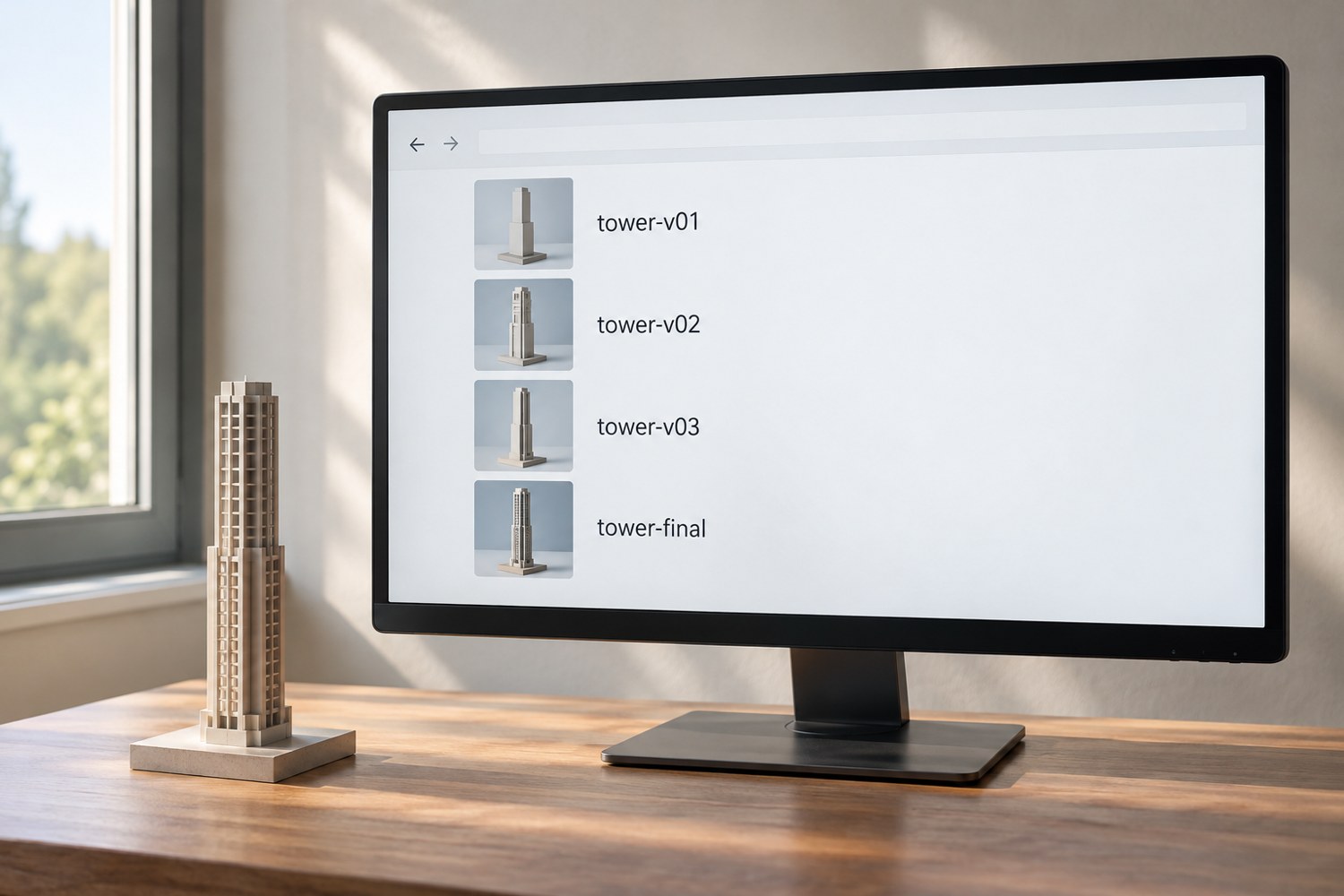
The file named final-final-new is usually a sign that the project has outgrown its naming habit. Use a short project identifier, a part name and a revision number instead. A name such as harbour-roof-r03 communicates more than a date alone, particularly when several parts are being revised on the same day.
Keep the editable source and exported files in different folders. The source may contain sketches, construction objects and alternative versions. The export folder should contain only what you intended to send to a slicer or another person. This separation reduces the chance of printing an old mesh merely because it was the first result in a folder search.
Use a simple revision note beside the files. Record what changed and why: enlarged roof recess after fit test, moved locating pin away from window, or removed underside detail for access. A useful note describes the decision, not just the fact that the file was saved. There is no need to record every mouse movement.
Link physical tests to the same revision. Write the identifier on a bag or label stored with the print. If the part is too small to mark safely, photograph it beside the label. Keep the relevant preparation settings with the test record so that geometry changes are not confused with changes in the printing process.
When a revision is accepted, copy the intended delivery files into a clean folder and reopen them. Do not simply rename the entire working folder approved. Confirm that the mesh matches the source revision and that all required parts are present. A readme with dimensions and assembly orientation can prevent a recipient from making assumptions that were obvious only to you.
Keep earlier revisions that explain an important decision, but move abandoned experiments out of the active export folder. Do not delete the only editable source while retaining its mesh. If storage space becomes a concern, review large temporary files separately from the project history you may need to repair or reproduce a part.
A naming system should be easy enough to use during an ordinary modelling session. Three consistent elements and a brief change note are better than an elaborate scheme that nobody maintains. The test is practical: can you pick up a printed sample and identify the exact model revision behind it without guessing?
Another detail to explore
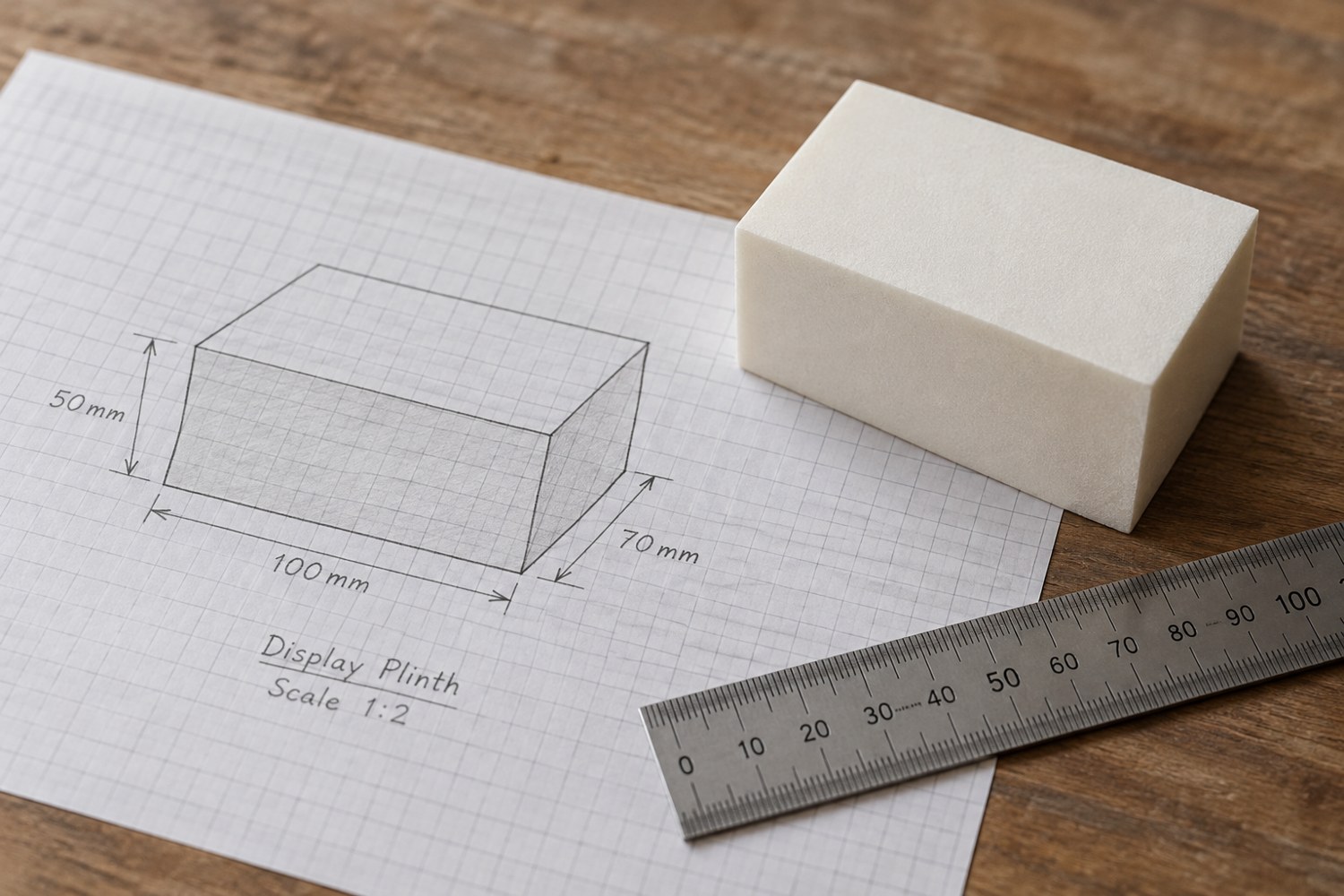
Start a model with dimensions instead of details
Build a short dimensional brief before adding bevels, textures or decorative features. It gives every later modelling decision a reference.
Read article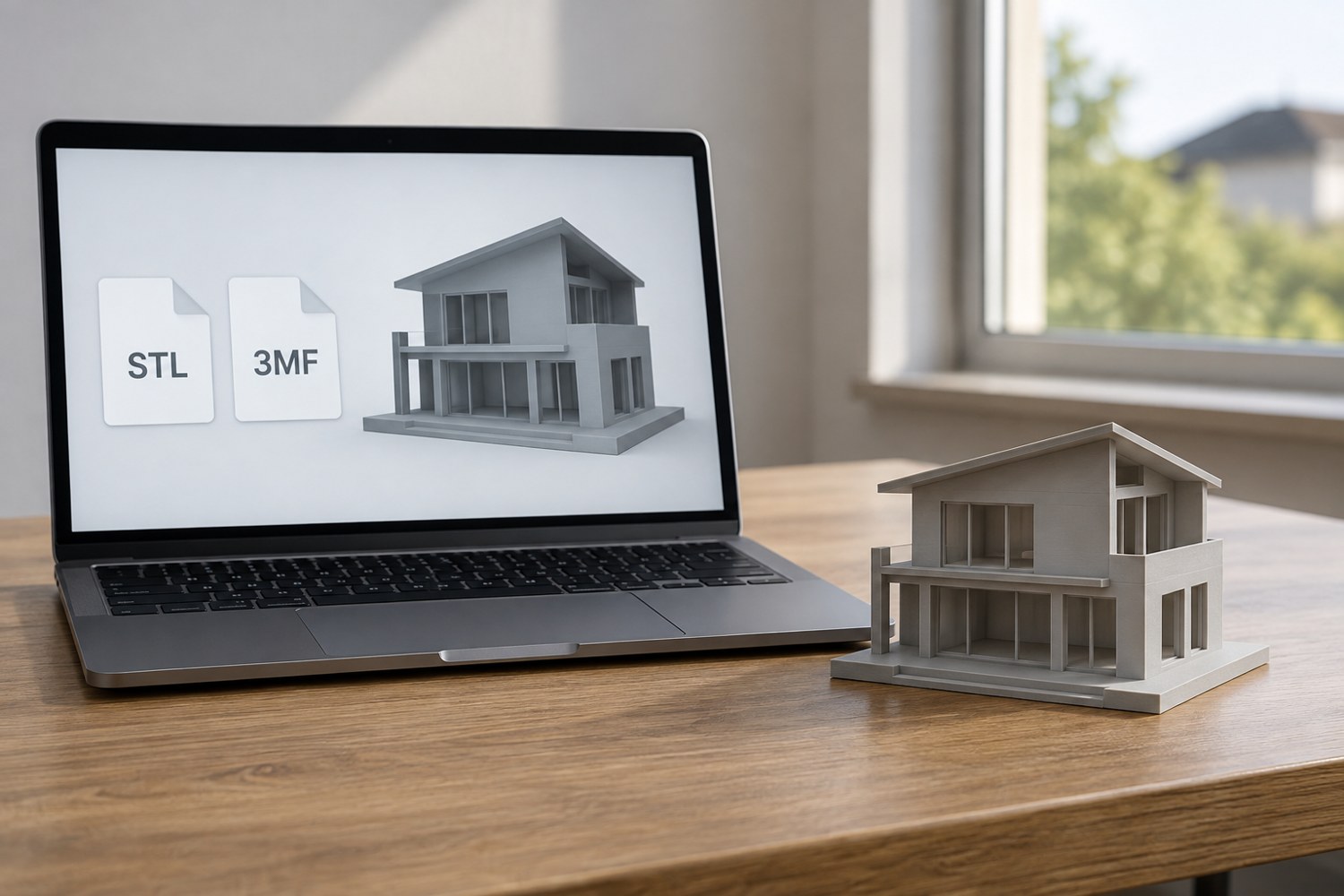
Understand STL and 3MF when sharing a print project
An STL mesh and a saved 3MF project can carry different information. Decide what a recipient needs before choosing the file to send.
Read article