Keep useful notes about successful print settings
Record enough context to reproduce a result without turning each print into a paperwork exercise.
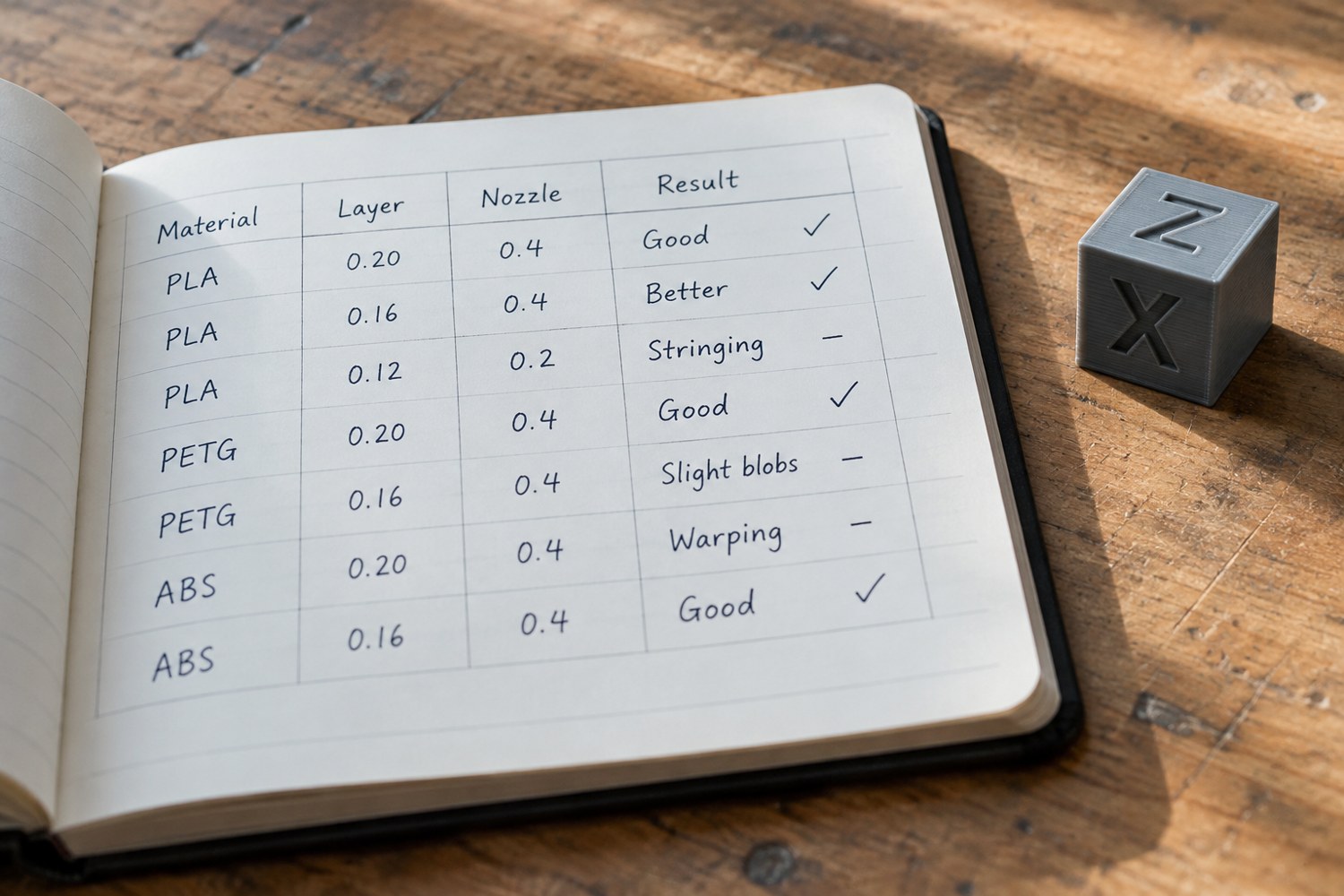
A successful print can be surprisingly hard to repeat if its only record is a photograph. The image may show the colour and shape, but not the nozzle, material variant or profile changes. Keep a short record that connects the physical object to the files and settings that produced it.
Start with a project name and revision. Add the printer, nozzle diameter, material brand and exact product name, plus the slicer version and profile names. Record changes from the profile rather than copying every unchanged field into a notebook. Save the editable slicer project where possible, and keep the final exported print file beside it with an unambiguous name.
Include orientation and surface information. “Flat side down” can be ambiguous on a box with several flat sides, so a screenshot is useful. Name the build sheet and note any manufacturer-approved preparation that mattered. If supports were selectively added or blocked, save them in the project instead of relying on a photograph of the finished object.
Describe success in terms of use. A smooth surface is not the same as an accurate fit, and a lid that closes once is not necessarily convenient to remove. Write a sentence such as “slides into the original tray after brim removal; no sanding on the sides.” That tells you which result was actually checked.
Keep the physical sample labelled if it will guide future work. A small underside mark can connect it to the file without changing a functional face. Store comparison pieces together so that colour, texture and fit are not judged from memory weeks later. If a sample is discarded, keep a photograph with a scale reference and the relevant dimensions.
Update the record when the setup changes. A new nozzle, revised slicer profile or different filament finish can make the old note a useful starting point rather than a proven recipe. Preserve the earlier version instead of overwriting it. The record should help you answer “what changed?” quickly, while staying short enough that you will actually complete it after the print.
Another detail to explore
Choose a first 3D printer around the objects you want to make
Start with three objects, their dimensions and the space available for making them. Those decisions narrow the printer search before speed claims do.
Read article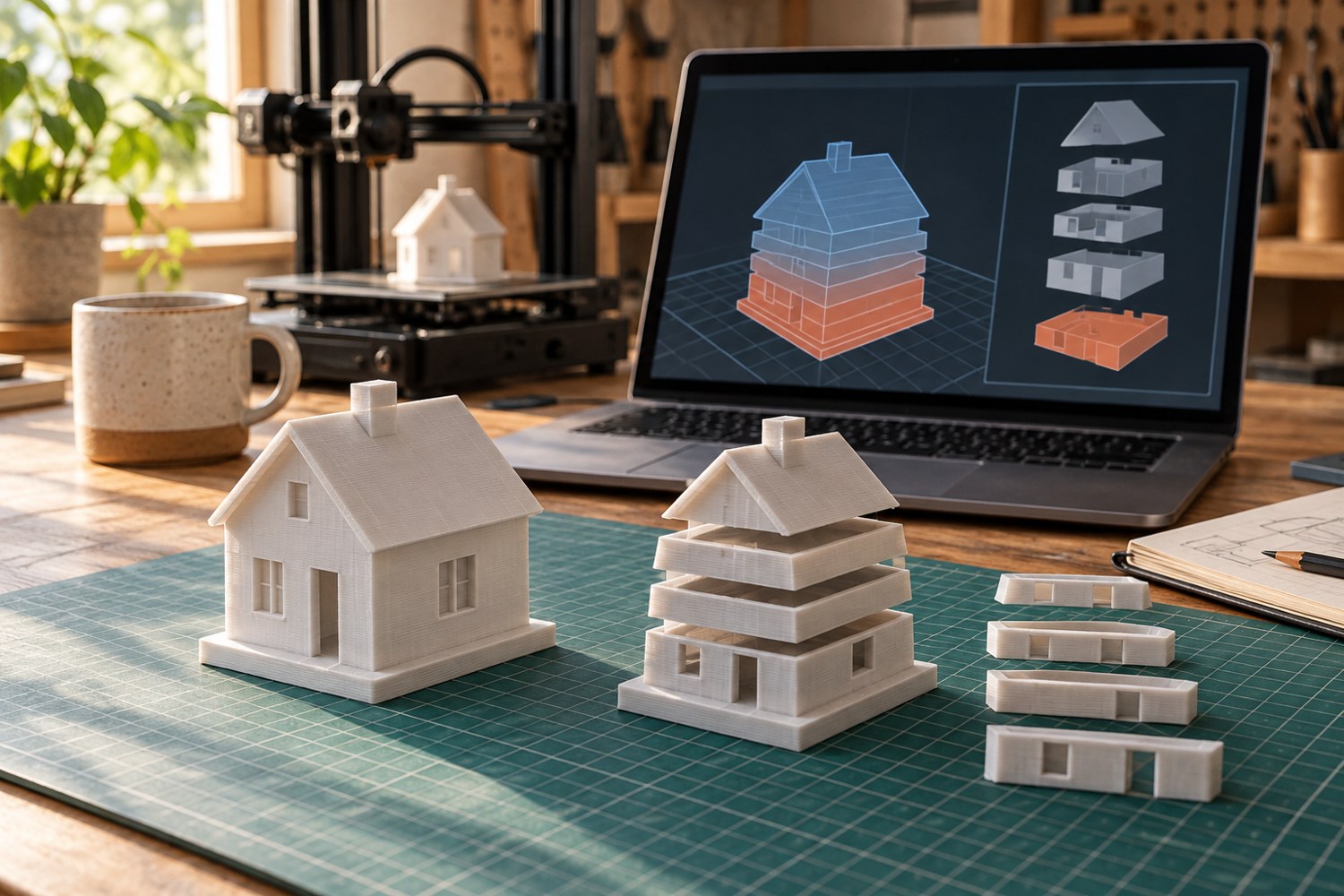
Read a sliced preview before starting a print
Read the toolpaths, first layer and delicate features before a file reaches the printer.
Read article