Make an inventory of a terrain collection
Record terrain by stable identifiers, useful dimensions and storage locations so the collection remains easy to assemble and maintain.
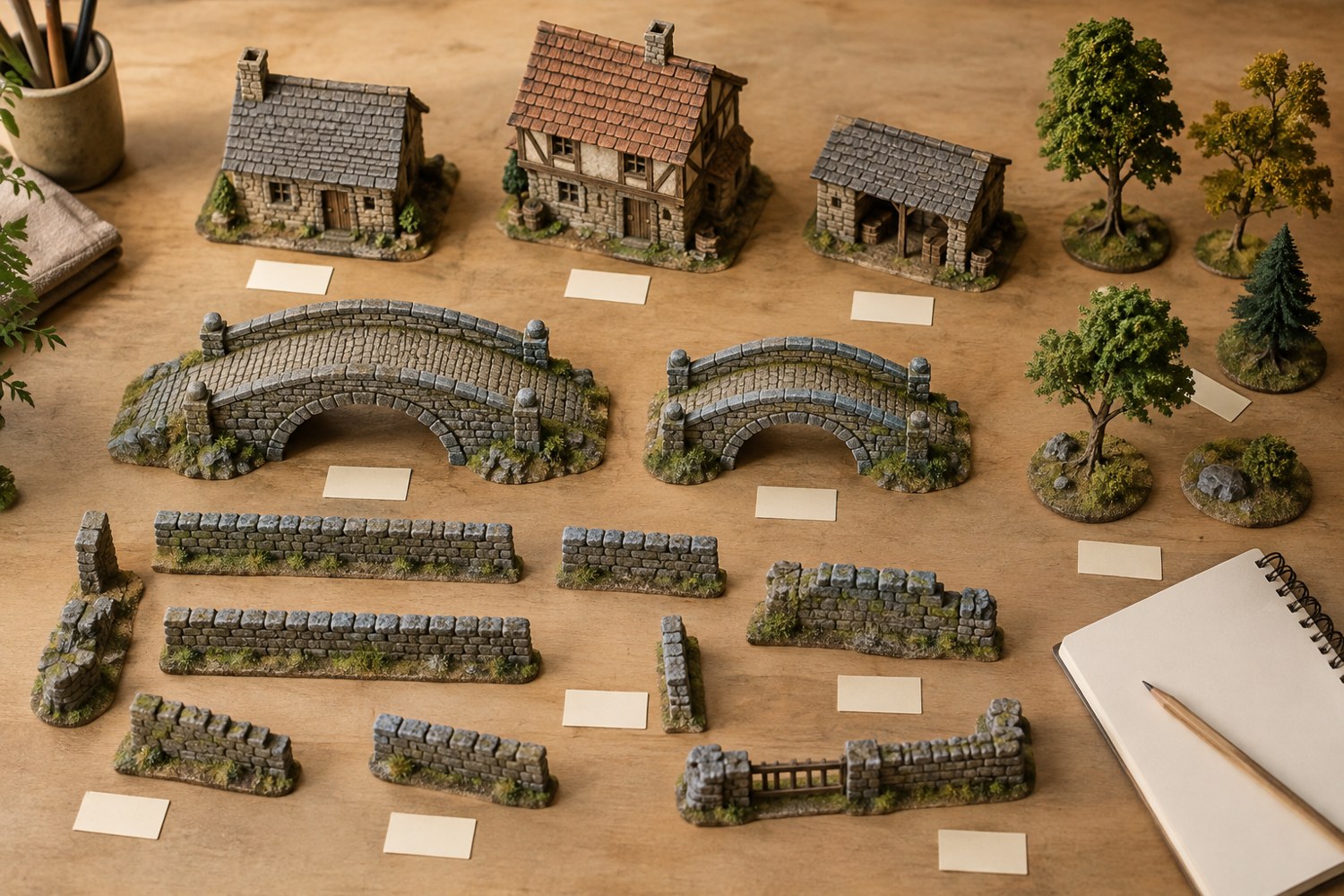
A terrain inventory should help you find and use pieces, not become a separate hobby. Give each item a short stable identifier. Use it on the underside, in the photograph filename and in the storage record. Keep the identifier separate from a descriptive name so renaming a building does not break the system.
Start with a few useful fields: identifier, description, footprint, maximum height, storage location and removable parts. Add material and finish notes where they affect repair or handling. Avoid collecting details you will never use. A simple spreadsheet or document is enough if it stays readable and backed up.
Photograph each piece from above and from an angle that shows its height. Include a close view of the underside label. For modular terrain, record the edge types or connection requirements. A tile called river corner is less useful than one whose compatible edges and orientation are clearly shown.
Keep the storage location specific. Box three, compartment two is easier to act on than workshop shelf. If the collection moves between locations, update the record when it moves rather than relying on memory. Put a small contents list inside each box so the physical and digital records support one another.
Use short condition notes that identify what needs doing: railing loose at the rear-left corner, or roof insert missing. Avoid vague ratings such as fair when the actual issue is known. Link a photograph where the problem is hard to describe.
Track spare and removable parts with the parent item. A detached bridge, tree or antenna should have its own labelled compartment but remain associated with the terrain it belongs to. Note whether it can be used with several pieces so it is not accidentally counted as several separate accessories.
Review the inventory when packing for an event or rearranging storage. Mark the selected items and check them back in afterwards. This is a useful moment to find loose details before they disappear into the bottom of a box. Keep an exported copy of the record in a common format alongside the photographs. The system succeeds when someone can locate a piece, understand its handling needs and return it to the right place without asking the maker to reconstruct the whole collection from memory.
Another detail to explore
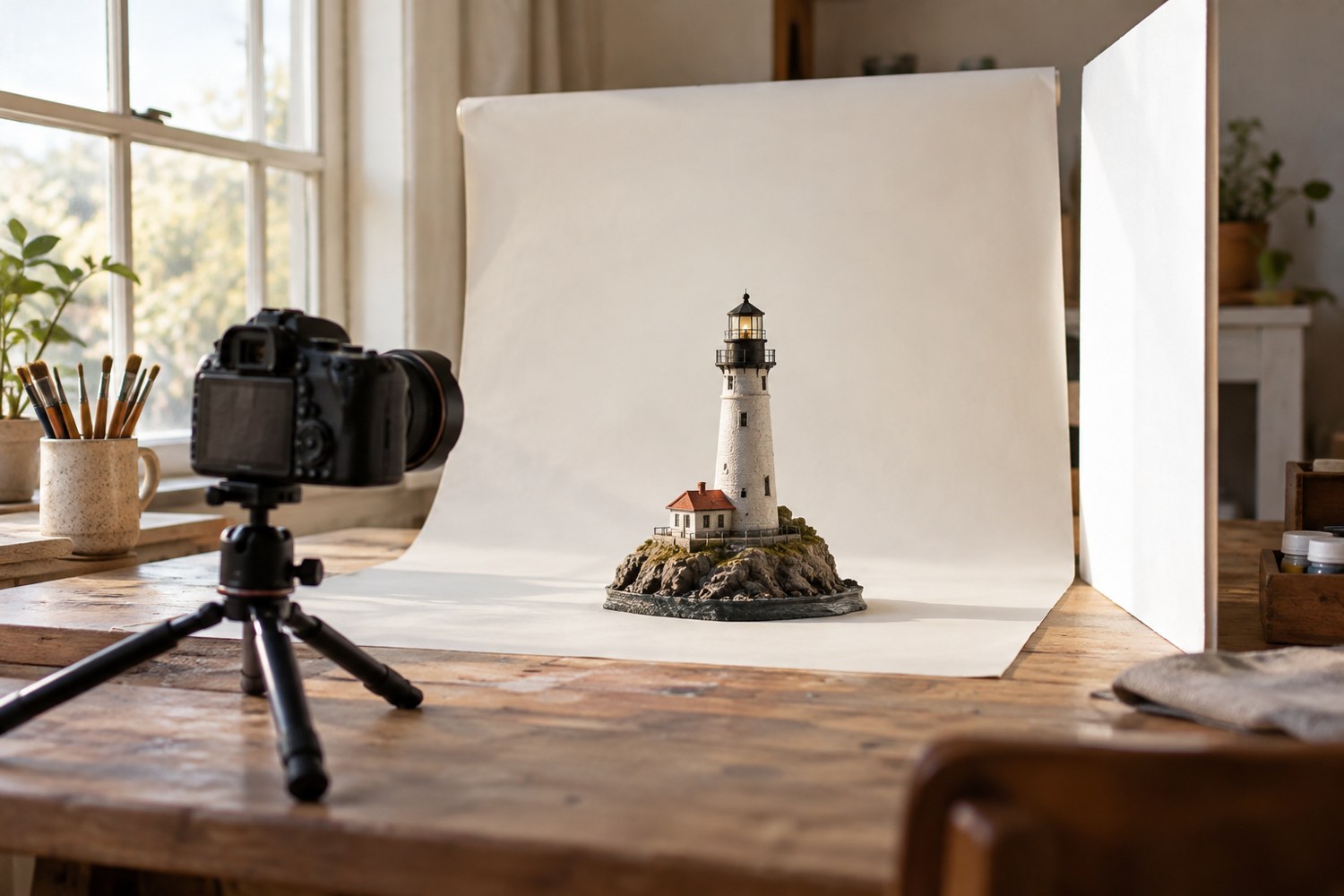
Photograph a miniature with a simple window-light setup
Use a stable model position, indirect window light and a simple reflector to make small forms readable in photographs.
Read article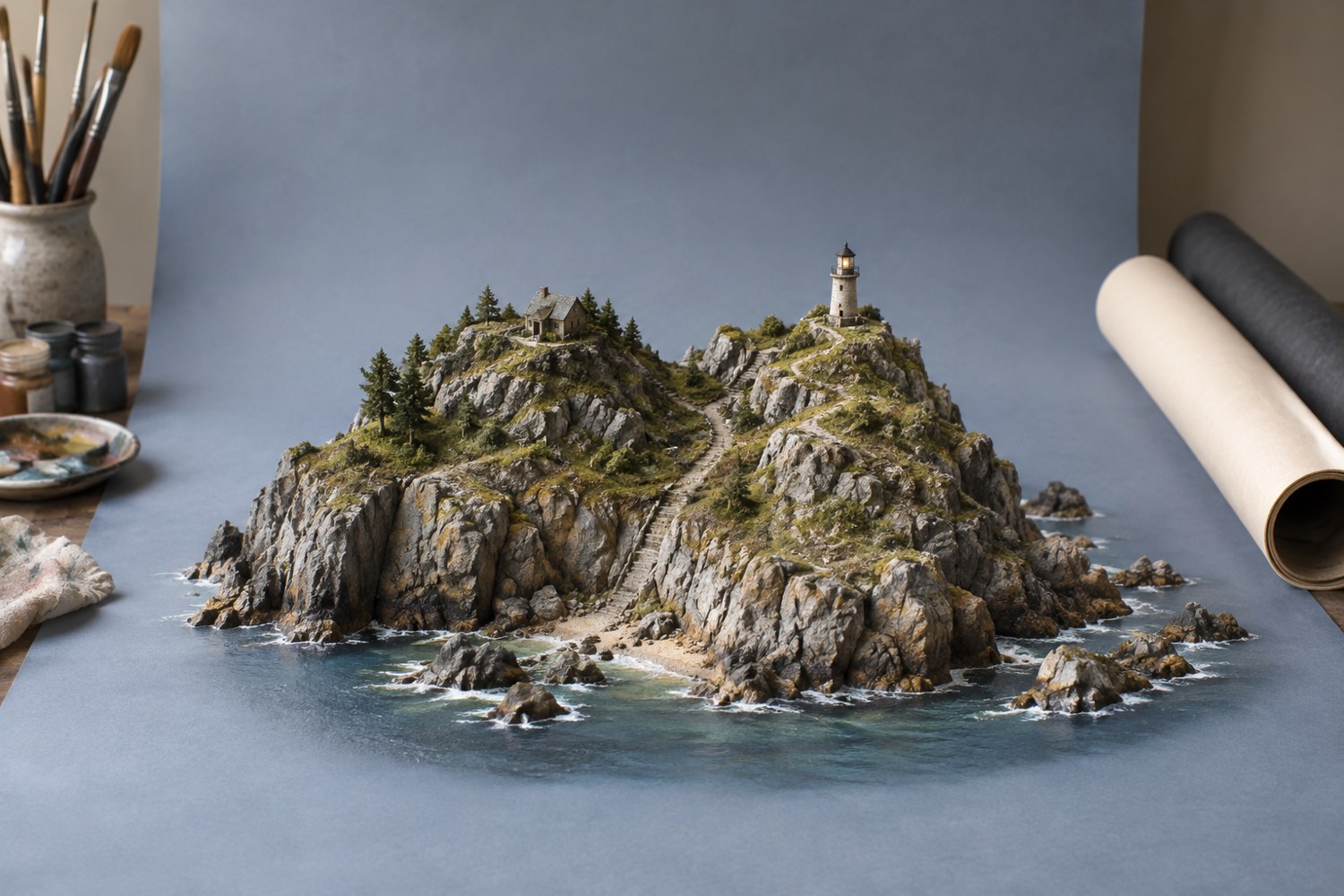
Choose a background for a terrain model
Choose a background that separates the model's silhouette and supports its colours without becoming a second subject.
Read article