Paint small windows without outlining every pane
Use a clear dark shape and selective reflections to suggest tiny windows without turning every pane into a heavy grid.
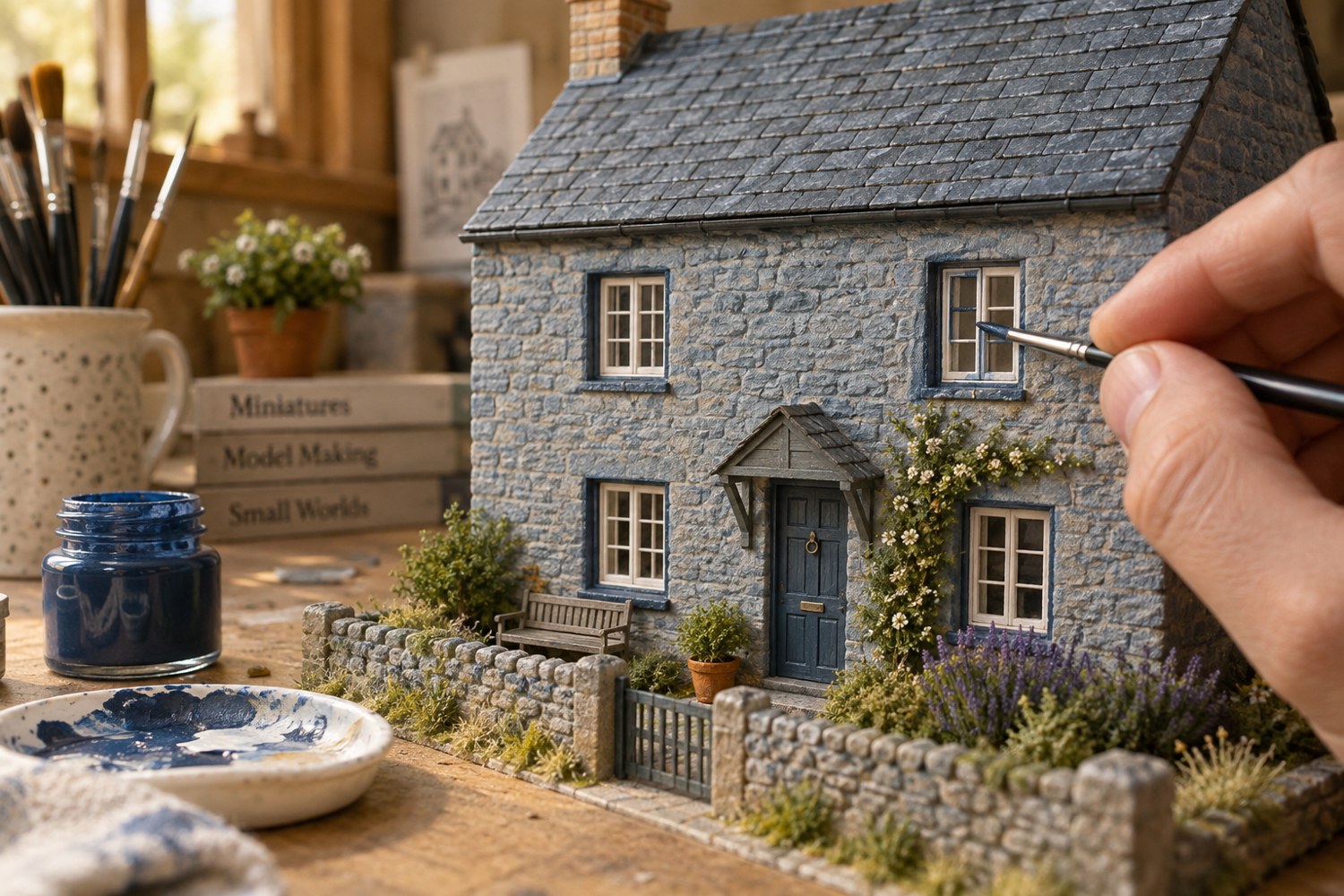
At a small scale, outlining every window pane can make a building look covered in thick bars. Begin by deciding how much detail will remain visible at the normal viewing distance. A dark opening, a narrow frame and one controlled reflection may describe the window more clearly than a complete grid.
Paint a spare wall or an inconspicuous sample first. Use the surrounding wall colour as part of the test, because contrast changes how heavy a frame appears. A very dark frame on a pale wall needs less visual weight than a similar frame against dark stone.
Work from the larger shape towards the smaller marks. Establish the window opening neatly, then add the frame where it is actually modelled or where the scale can support it. Turn the building so each stroke is comfortable. Do not try to paint every horizontal and vertical line while holding the model in one fixed orientation.
A small lighter mark can suggest glass, but placing the same white diagonal on every window creates a pattern that may dominate the façade. Group the reflections according to the imagined light and viewing angle. Some windows can remain quieter or darker, particularly under overhangs.
If the model has deep recesses, let the physical shadow do part of the work. Painting a bright border around the entire opening can flatten that depth. Keep the strongest highlight on selected edges and compare it with neighbouring doors and roof details.
For a row of windows, finish one complete example before repeating the method. Photograph it at the size the whole building will appear in a portfolio image. If the frame is already too strong, simplify the method now rather than correcting twenty panes later.
Clean small mistakes with the adjacent colour after the previous layer is ready for overpainting. Avoid repeatedly chasing a wet line. A slightly simplified, consistent window often reads better than a highly detailed one surrounded by corrective paint buildup. At the end, judge the façade as a whole. The windows should explain the building's rhythm and scale while leaving the main doorway, sign or other focal feature room to stand out.
Another detail to explore
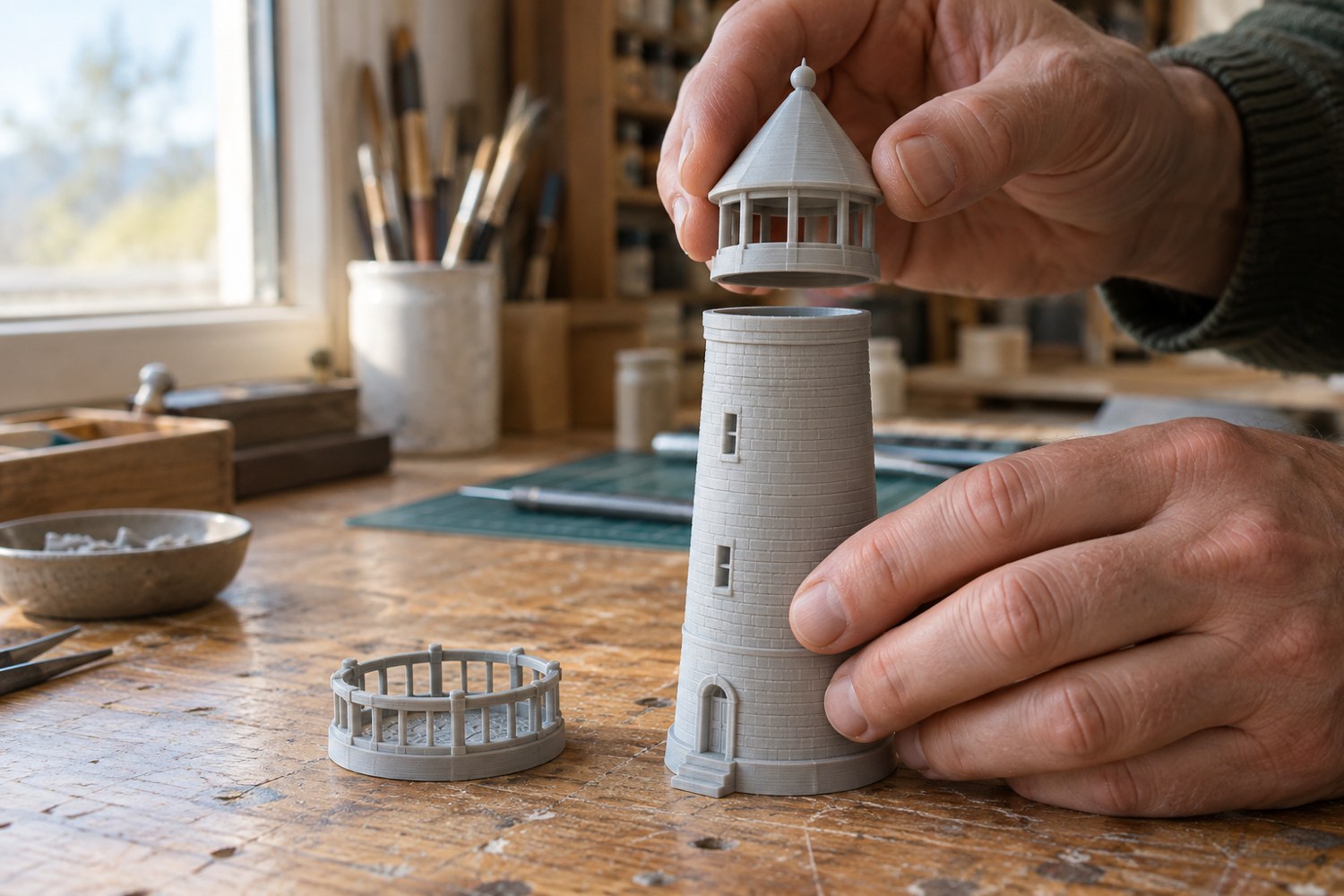
Dry-fit a printed model before reaching for glue
Check alignment, access and assembly order with temporary placement before an adhesive makes the decision permanent.
Read article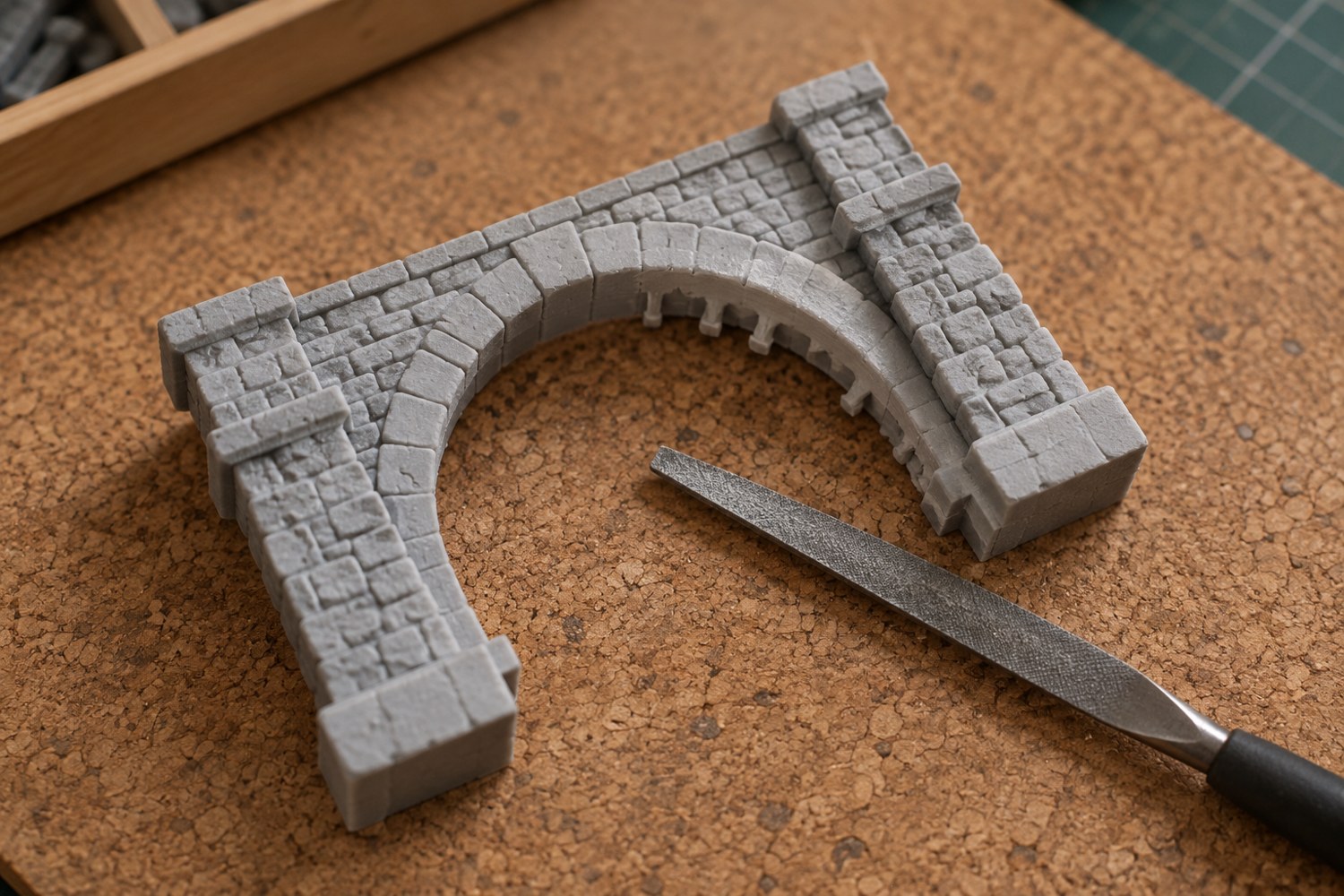
Remove support marks without flattening the model
Identify each support scar and protect the surrounding shape before removing material from a finished print.
Read article