Plan a limited colour palette for a miniature building
Assign colours to material roles and reserve one accent before painting a miniature building.
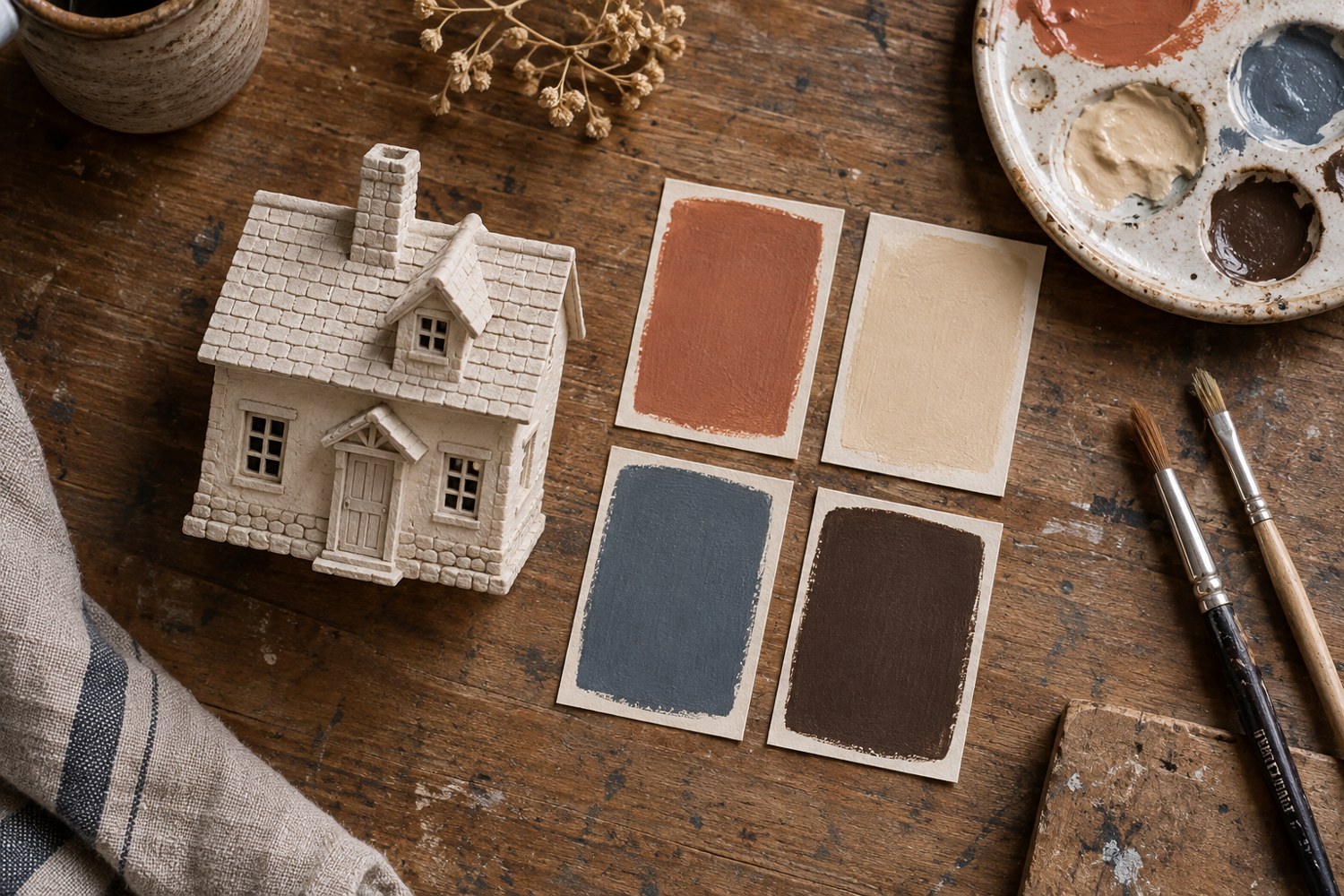
A limited palette helps a small building read as a single object. Start with its material roles: wall, roof, woodwork, metal and glass. You do not need a completely separate family of colours for every role. Several can share an undertone while differing in lightness, texture and finish.
Choose the main wall colour first, then place a roof swatch beside it. Judge their relationship rather than each colour alone. A roof that looked subtle in the bottle can become the brightest area of a small model. Add a darker recess colour and a lighter edge colour that work with both surfaces.
Make a small block-in study of the building's front. Keep windows and doors simple. This reveals whether the scheme relies on details too small to matter at normal viewing distance. If the whole façade becomes one flat value, change the roof or doorway relationship before buying more accent colours.
Give the accent a limited job
Choose one feature to carry the strongest accent: a door, sign, shutter or piece of equipment. Repeat it sparingly elsewhere if the scene needs cohesion. Painting every frame in the accent can turn a quiet building into a striped object.
Use texture and placement to distinguish materials that share similar colours. A smoother painted door and a broken stone wall can remain different without introducing unrelated hues. Keep the distinction visible in the larger shapes, not only in tiny weathering marks.
Paint a complete test area before repeating the scheme across a village. Include the planned wash or highlight, because those stages can change the balance. Record the actual products and mixes on a physical swatch. A photograph alone may not preserve the colour accurately enough for a later extension.
Leave some surfaces simple. A limited palette loses its benefit if every wall receives several contrasting stains and bright chips. Add wear where it explains use, then step back. The building should still have a clear wall-and-roof relationship when seen as a small shape on the finished terrain.
For a group of buildings, keep the shared material colours and vary one secondary area. This creates a family resemblance without making every house identical. Store the palette card with the project so repairs can return to the original scheme rather than introducing an accidental new colour family.
Another detail to explore
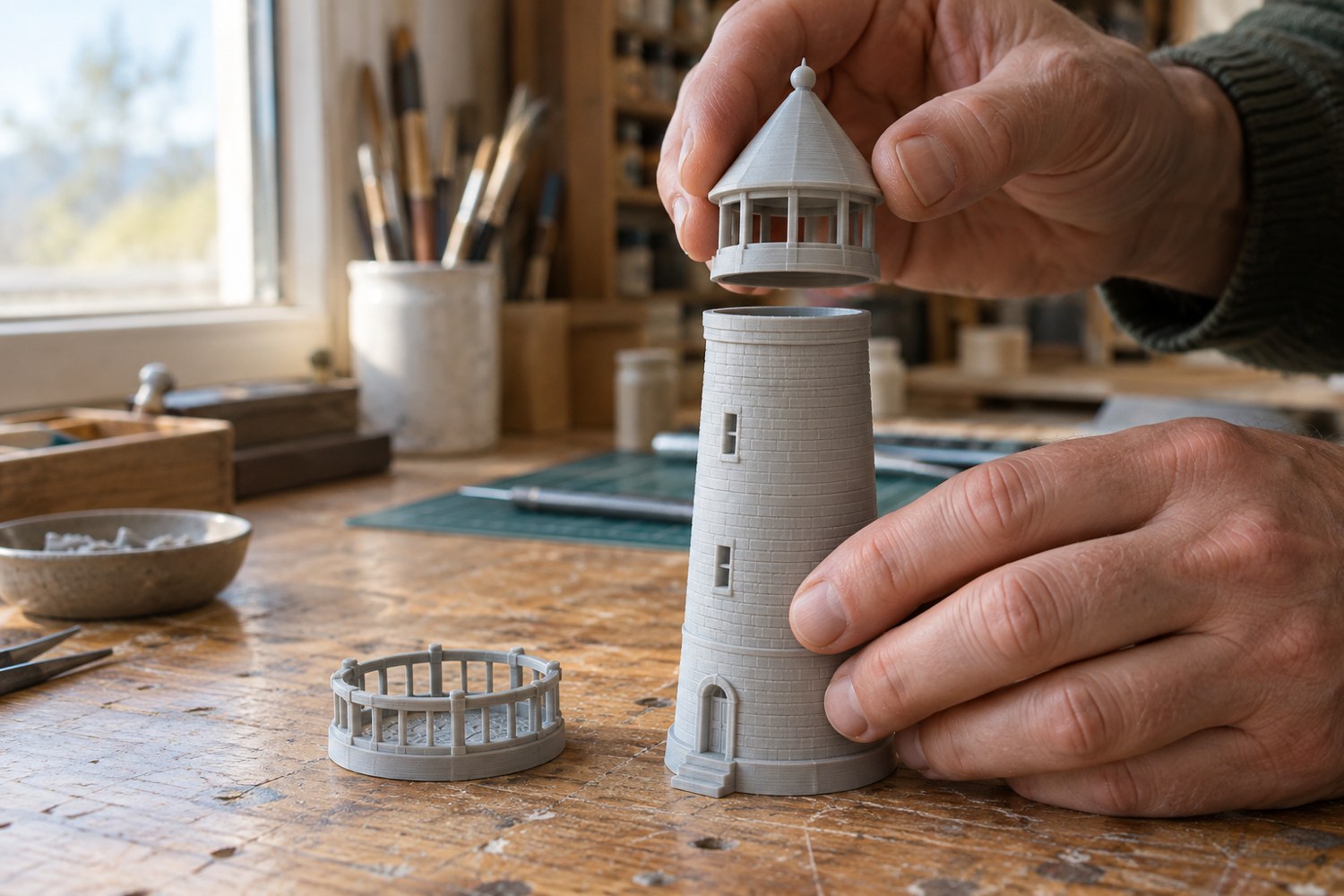
Dry-fit a printed model before reaching for glue
Check alignment, access and assembly order with temporary placement before an adhesive makes the decision permanent.
Read article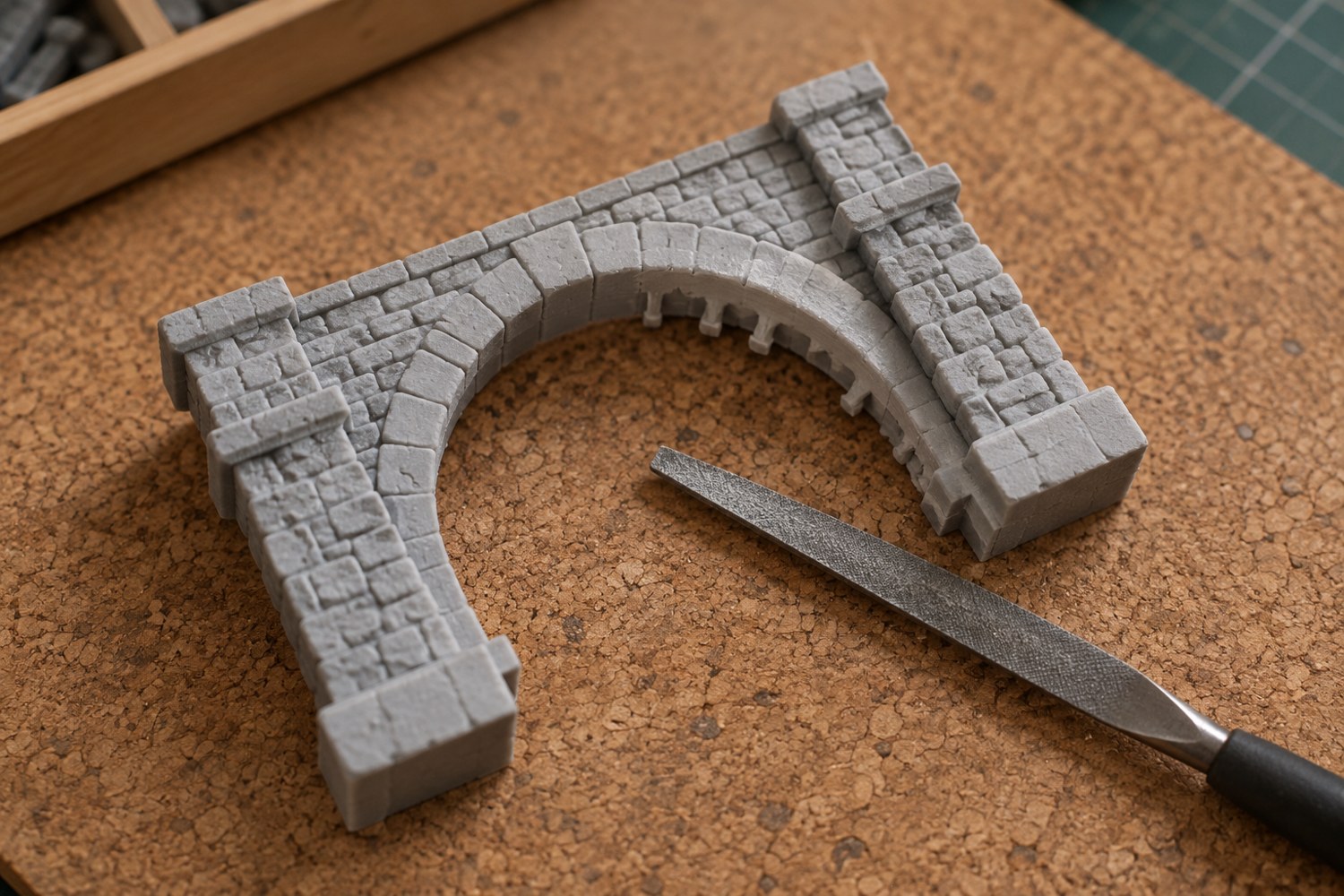
Remove support marks without flattening the model
Identify each support scar and protect the surrounding shape before removing material from a finished print.
Read article