Separate a first-layer problem from later warping
Use the timing and shape of lifting to distinguish an immediate first-layer fault from later distortion.
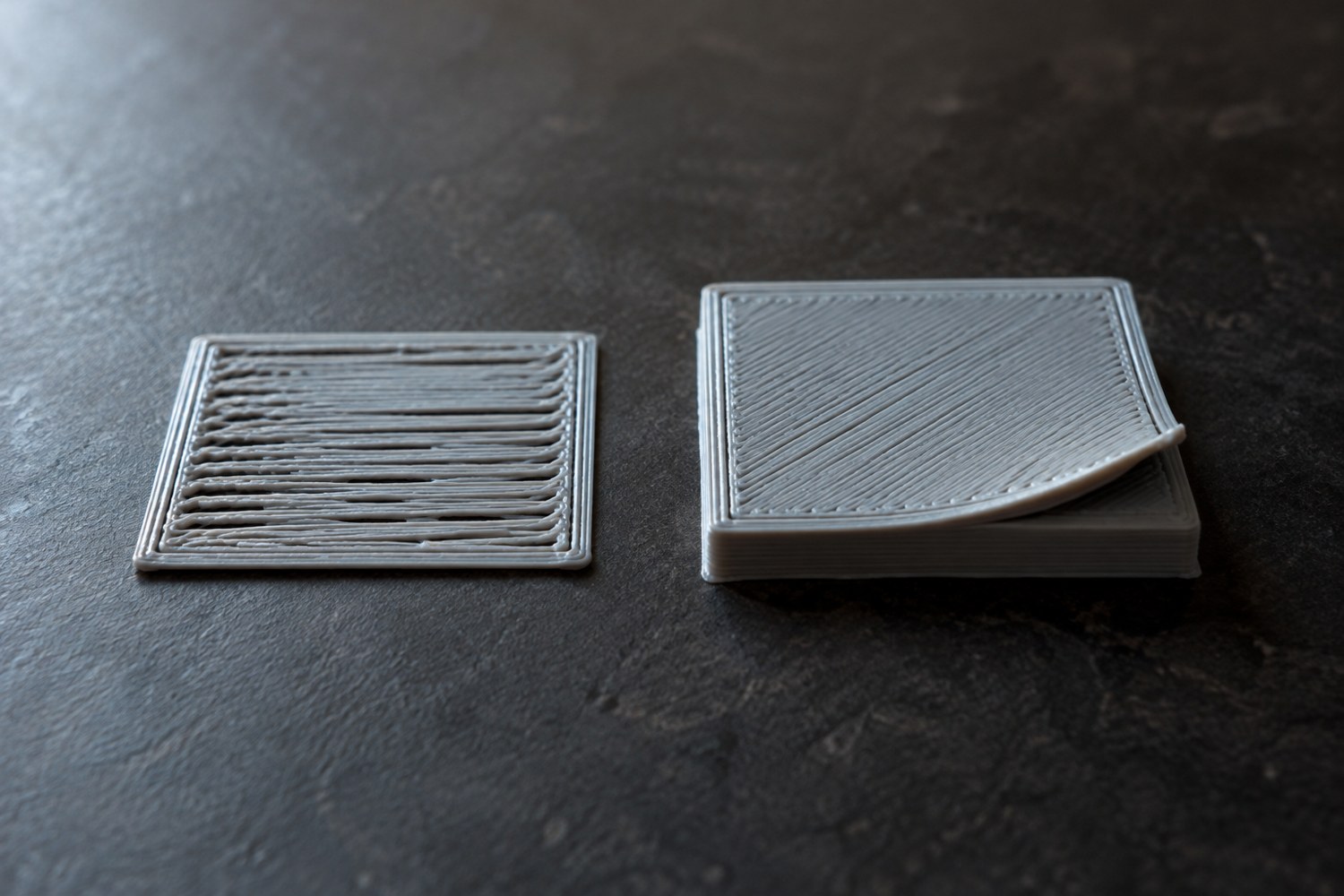
Two prints can finish with a lifted corner yet begin differently. One may never have formed a sound first layer. Another may have started flat and gradually curled as the object grew. The final shape alone does not reveal the full sequence, so observe the start and note when the first change appears.
Begin with the correct material and printer profile. Review the machine's documented build-surface preparation and calibration procedure. Do not compensate for poor adhesion by forcing the nozzle unusually close to the sheet. Prusa's first-layer guidance warns that excessive adjustment can damage the surface; the appropriate procedure depends on the printer's sensing and calibration system.
Observe before removing
A useful first-layer record includes the overall footprint and a close view of a representative area. Note whether lines appear continuous and joined as expected, whether a particular region is missing and whether the model shifts early. These observations do not replace the manufacturer's examples, but they give you something specific to compare with them.
If the first layer remains attached and a corner rises later, record the height or stage at which it happens. Thermal contraction is one source of warping, and Prusa's guidance emphasises that the material and geometry influence the response. A broad panel and a tiny tower should not automatically receive the same change in cooling or enclosure conditions.
Consider what changed in the surrounding setup. Was the printer moved? Was a nearby door opened? Was a different material loaded? Do not block necessary ventilation to make the air around the part warmer. Any enclosure or environmental change needs to remain compatible with the machine and exposure-control requirements.
Separate the trials
For an immediate first-layer problem, first work through surface identity, preparation, seating and the specified calibration checks. Use a modest known test rather than restarting a large terrain panel after every adjustment. Once that test behaves normally, return to the larger geometry and see whether the later lifting remains.
For later warping, compare the material manufacturer's profile and the printer maker's troubleshooting guidance. Inspect the model's long uninterrupted surfaces and sharp corners. A revised orientation, a planned brim or dividing a large base into sections may be worth testing. Avoid changing temperature, fan behaviour and geometry together unless you are deliberately starting a completely different baseline.
Keep a photograph from each trial and note when lifting began. “Flat for the first section, then rear corner rose” is more helpful than “bed adhesion bad.” Also inspect the finished base after it has cooled: a part that looks attached during printing may still be unsuitable as a flat mating surface.
The objective is not to assign every defect to one perfect category. First-layer preparation and later stresses can interact. The value of separating them is that you stop using the same remedy for every raised corner. Once the basic first layer is repeatable, changes aimed at the larger part become easier to interpret and less likely to conceal another unresolved issue.
A small table with three columns can keep the sequence clear: what was visible at the start, what appeared later, and what was changed for the next trial. For example, a continuous first layer followed by a raised corner halfway up a broad base should not be entered as the same event as loose lines in the first minute. The table need not name the cause; preserving the chronology is enough to prevent those two observations from being merged.
Include a control object only when it answers a question. If a modest familiar part behaves normally while the broad panel continues to lift, the comparison suggests concentrating on the larger geometry and its conditions. It does not prove that the machine is perfect, but it gives the next investigation a narrower starting point.
Another detail to explore
Choose a first 3D printer around the objects you want to make
Start with three objects, their dimensions and the space available for making them. Those decisions narrow the printer search before speed claims do.
Read article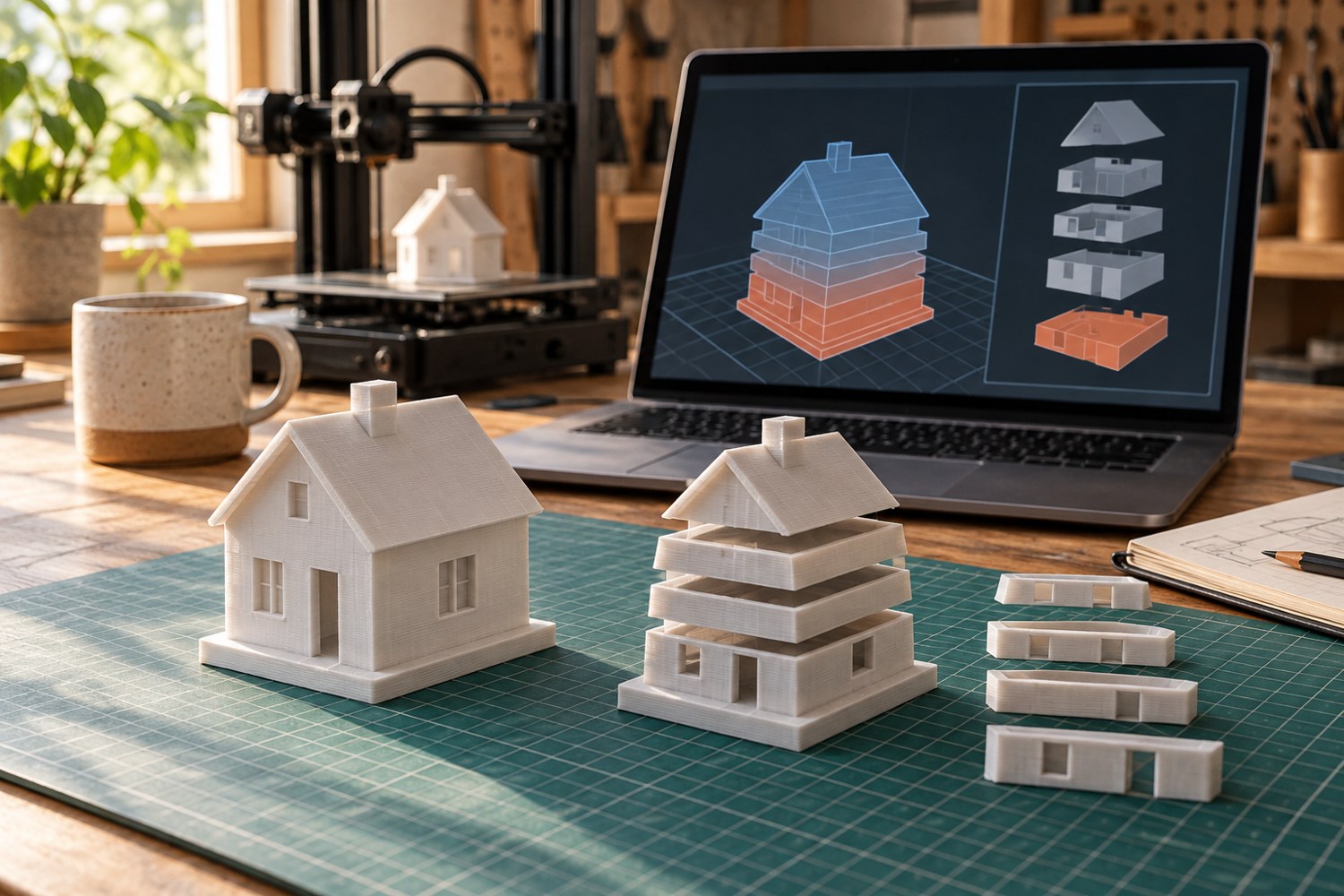
Read a sliced preview before starting a print
Read the toolpaths, first layer and delicate features before a file reaches the printer.
Read article