Use a turntable to inspect a finished print
Use a stable turntable to inspect changing reflections and silhouettes, with the model supported by its base.
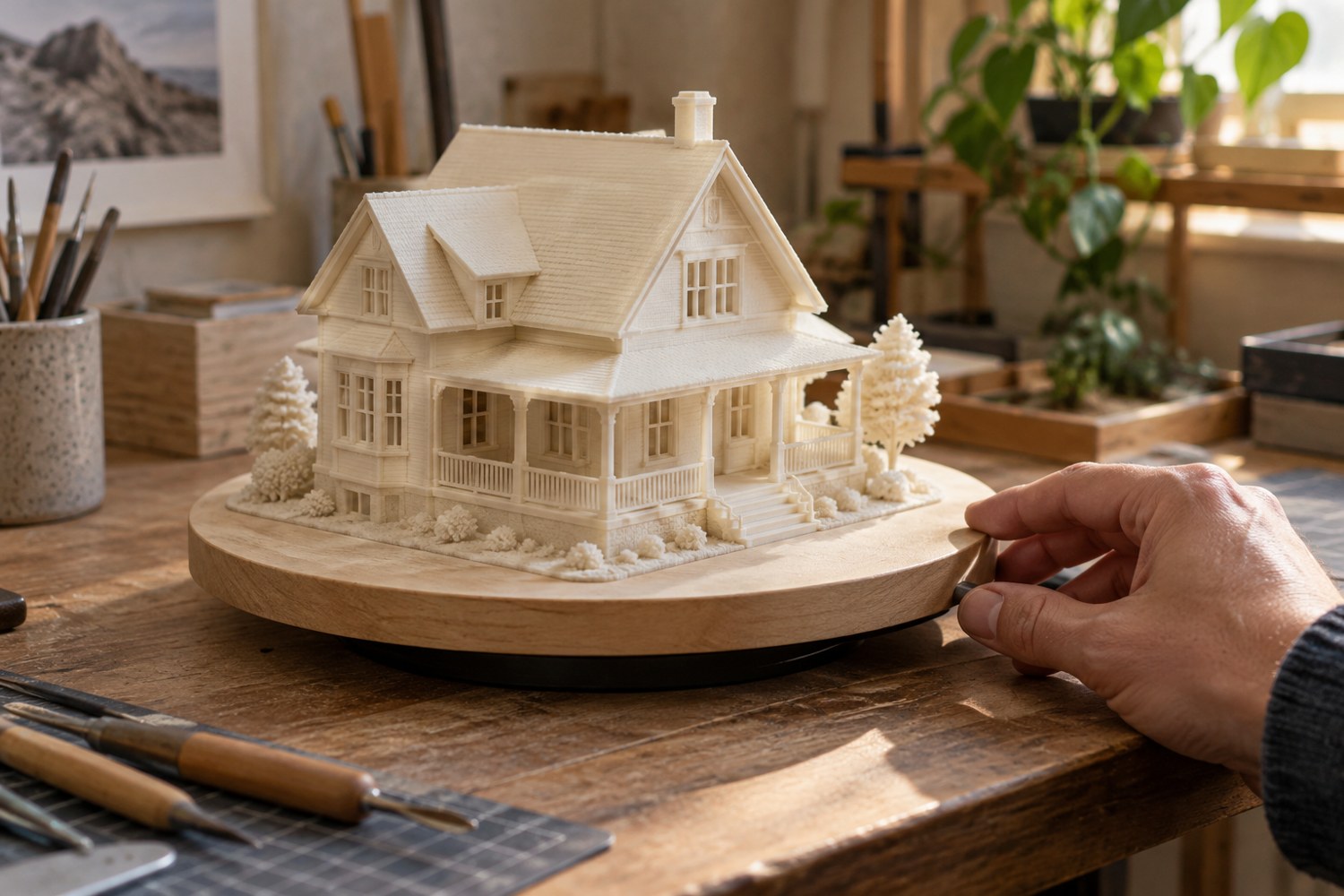
A turntable can reveal defects that disappear from a favourite viewing angle. Before placing a model on it, check the platform's load limit, stability and surface dimensions. The entire base should have secure support. A tall or uneven model may need more care than a small centred object even when both are within the stated weight limit.
Set the turntable on a level, clear surface and test it empty. Remove loose accessories from the model before inspection. Position the model so it is balanced and easy to lift by a robust base edge, not by a tower or decorative projection.
Use a fixed light to one side and rotate the model slowly. Watch how seams, layer lines and surface texture appear as the angle changes. Stop at any area you want to examine rather than trying to diagnose it while it moves. A reflection can make a harmless colour difference look like a physical ridge, so inspect the shape under another angle before deciding on a repair.
For inspection, a stronger side light can expose surface irregularities. For a portfolio image, a softer arrangement may describe the finished model more evenly. Keep those purposes distinct. A model does not need to be repainted simply because a deliberately harsh inspection light reveals every tiny texture.
Check the silhouette during a full rotation. Look for unexpected tangencies between features, an unfinished back or details that project beyond the intended footprint. If the model is designed for one fixed viewing direction, note that rather than treating every hidden surface as an equal display face.
When photographing, stop the turntable before taking a still image unless you are deliberately recording motion. Use marked positions for consistent front, side and three-quarter views. Keep the camera position fixed so the series shows the model turning rather than the framing changing.
After inspection, remove the model before moving or storing the turntable. Do not carry both together as a tray unless the product is designed for that use. Keep a short repair list with photographs of the specific angles that revealed each issue. This makes the turntable a repeatable inspection tool instead of a reason to keep searching indefinitely for ever-smaller imperfections.
Another detail to explore
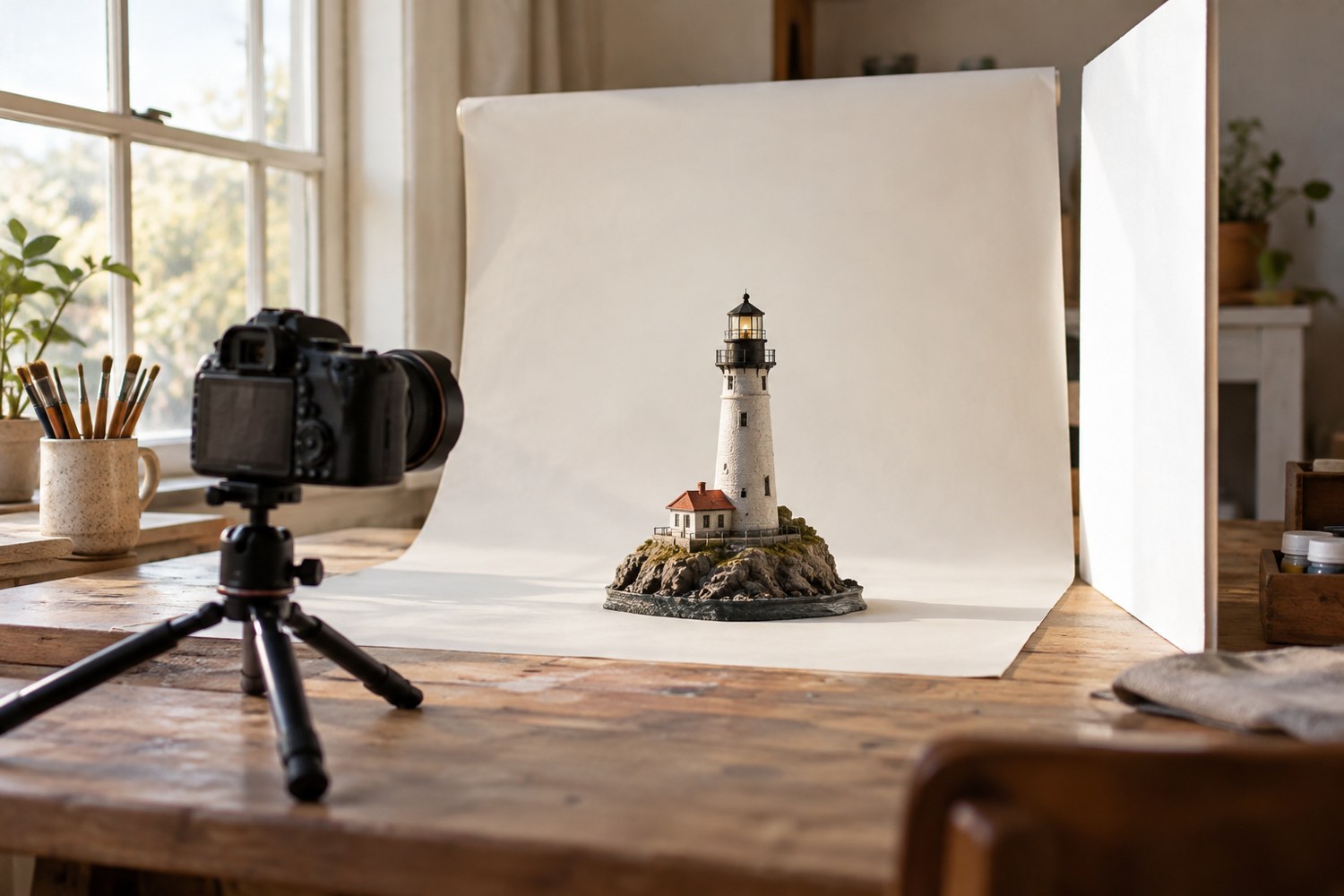
Photograph a miniature with a simple window-light setup
Use a stable model position, indirect window light and a simple reflector to make small forms readable in photographs.
Read article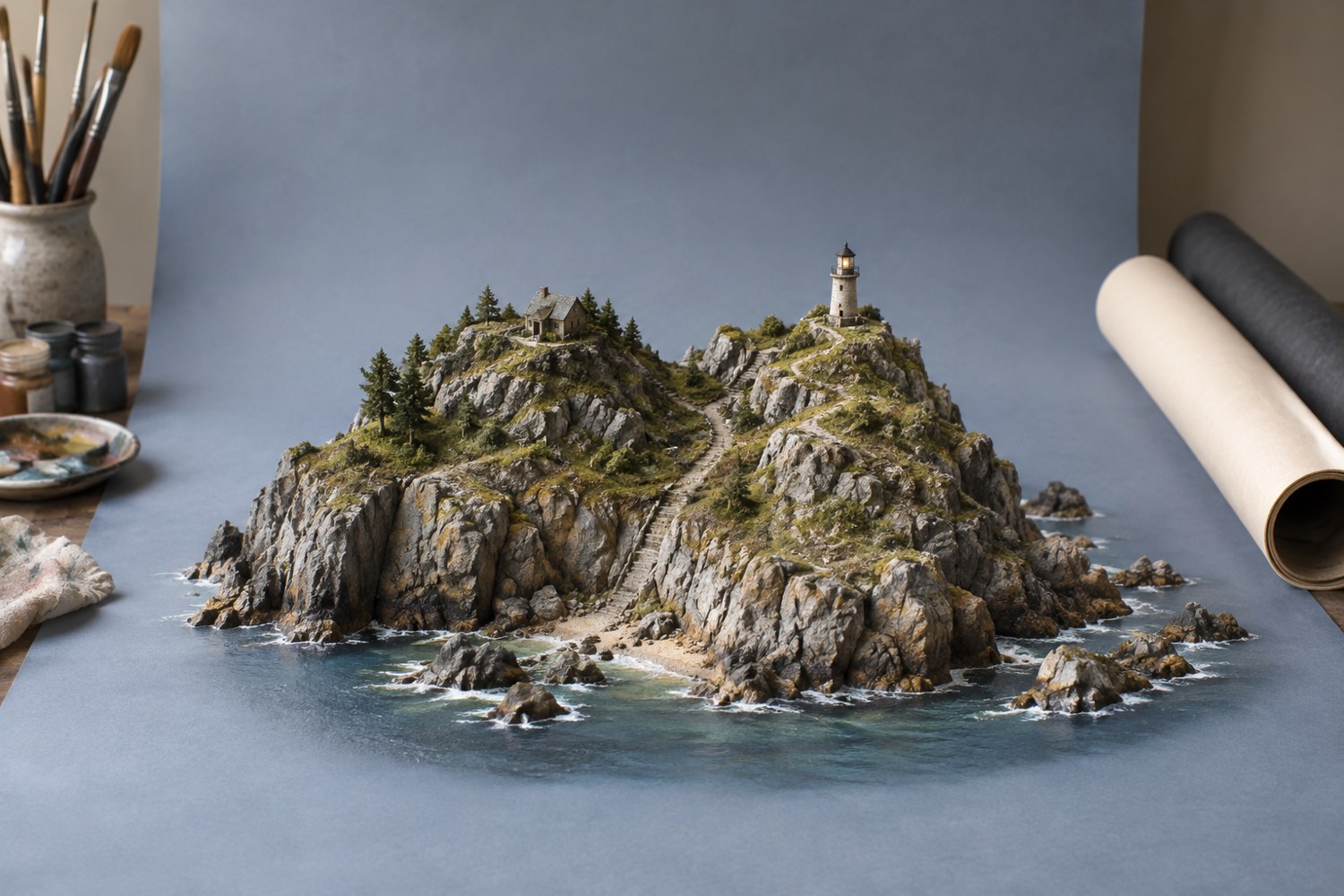
Choose a background for a terrain model
Choose a background that separates the model's silhouette and supports its colours without becoming a second subject.
Read article