Choose ground texture for a small-scale scene
Match the size and contrast of ground particles to the scene rather than choosing texture by its appearance in the bag.
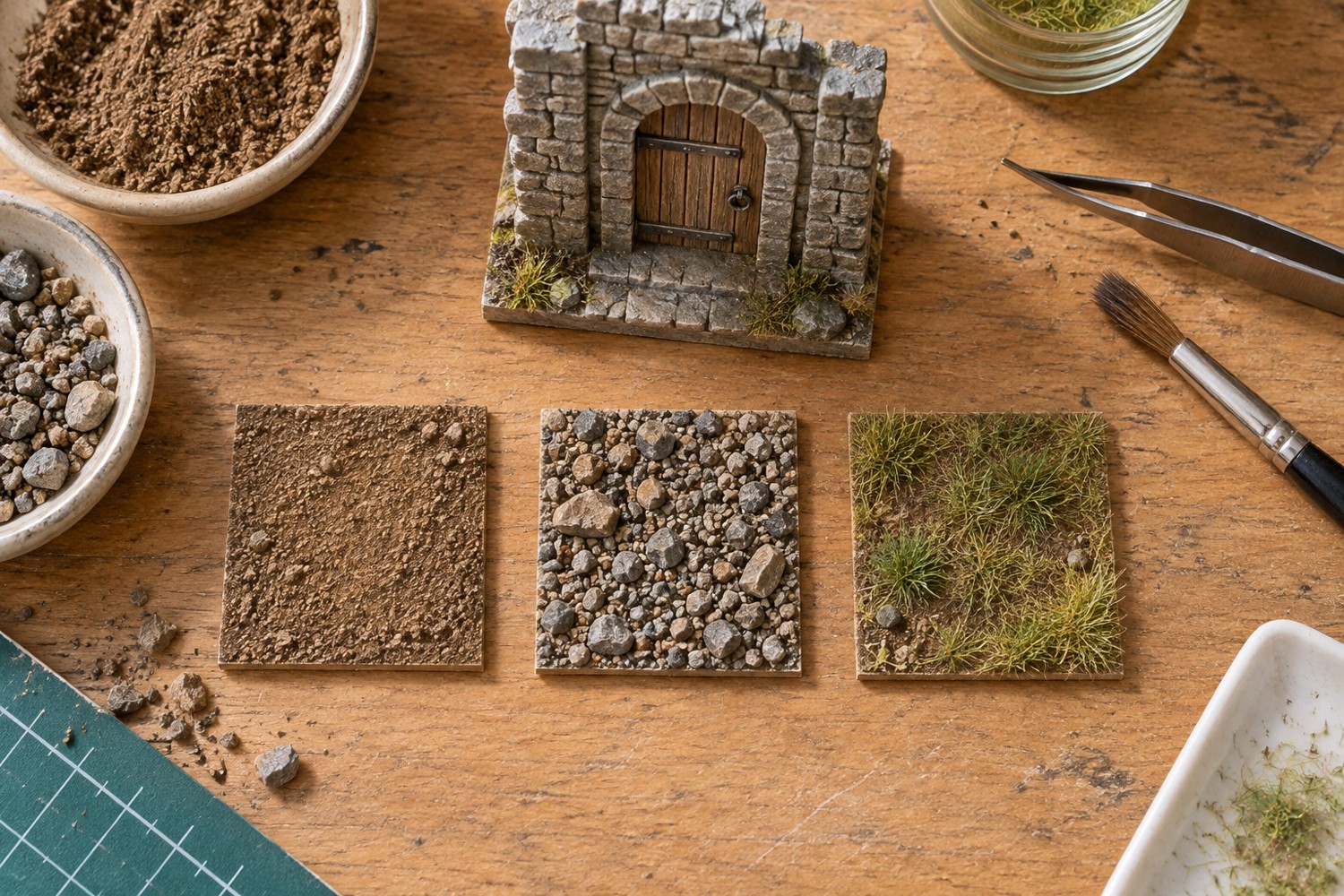
Ground texture is a scale cue. A grain that looks like sand on the workbench may resemble a boulder beside a tiny doorway. Put a small sample next to a representative model before covering the base. View it from the distance at which the finished scene will normally be seen, not only through a close-up camera.
Decide what the surface represents. A maintained path, rough shoreline and cultivated field need different visual rhythms. Choose one dominant texture for each area and add smaller changes where they explain use or terrain. Mixing every available material across the whole base produces noise without a clear ground type.
Make a test patch on scrap prepared like the real base. Include the adhesive and paint sequence you intend to use. Texture can change appearance after it is fixed and coloured; a pale loose material may become much darker or less distinct. Let the sample finish according to the products' instructions before judging it.
Keep texture out of building footprints, tile joints and any area where a gaming base must sit level. Mark those zones before applying adhesive. It is easier to blend a clean boundary later than to remove hardened grains from a locating recess.
Vary the density rather than constantly changing the material. A few exposed patches can suggest a worn route, while a denser margin can connect a wall to the ground. Avoid a perfectly even sprinkle unless the scene calls for a deliberately uniform surface.
Use colour to join adjacent materials. A small amount of shared tone can make cork, printed rock and fine ground texture feel part of the same landscape. Keep enough distinction for the viewer to recognise separate surfaces. If everything receives the same heavy highlight, the terrain may become visually flat despite its physical relief.
After the adhesive is fully ready for handling, remove loose material with the cleanup method appropriate to the product. Check the base over a clean tray so escaped grains do not enter moving parts or storage fittings. Photograph the result beside a scale reference. If the texture looks too coarse, repainting may reduce contrast, but changing the particle size on a sample first is a more reliable way to choose the next section.
Another detail to explore
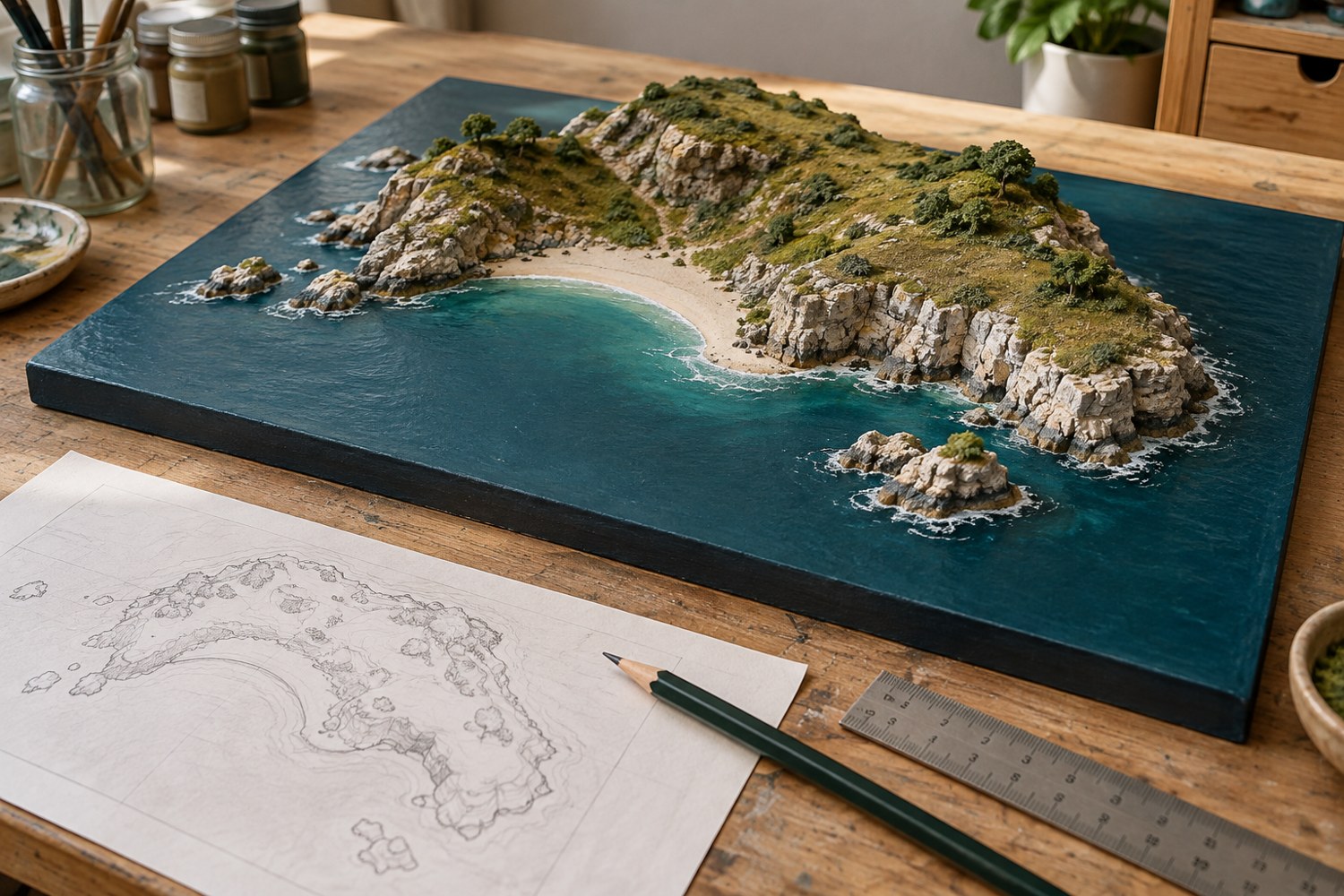
Plan an island diorama before building the coastline
Turn an island idea into a buildable composition by deciding the viewing angle, scale, shoreline and assembly order on paper first.
Read article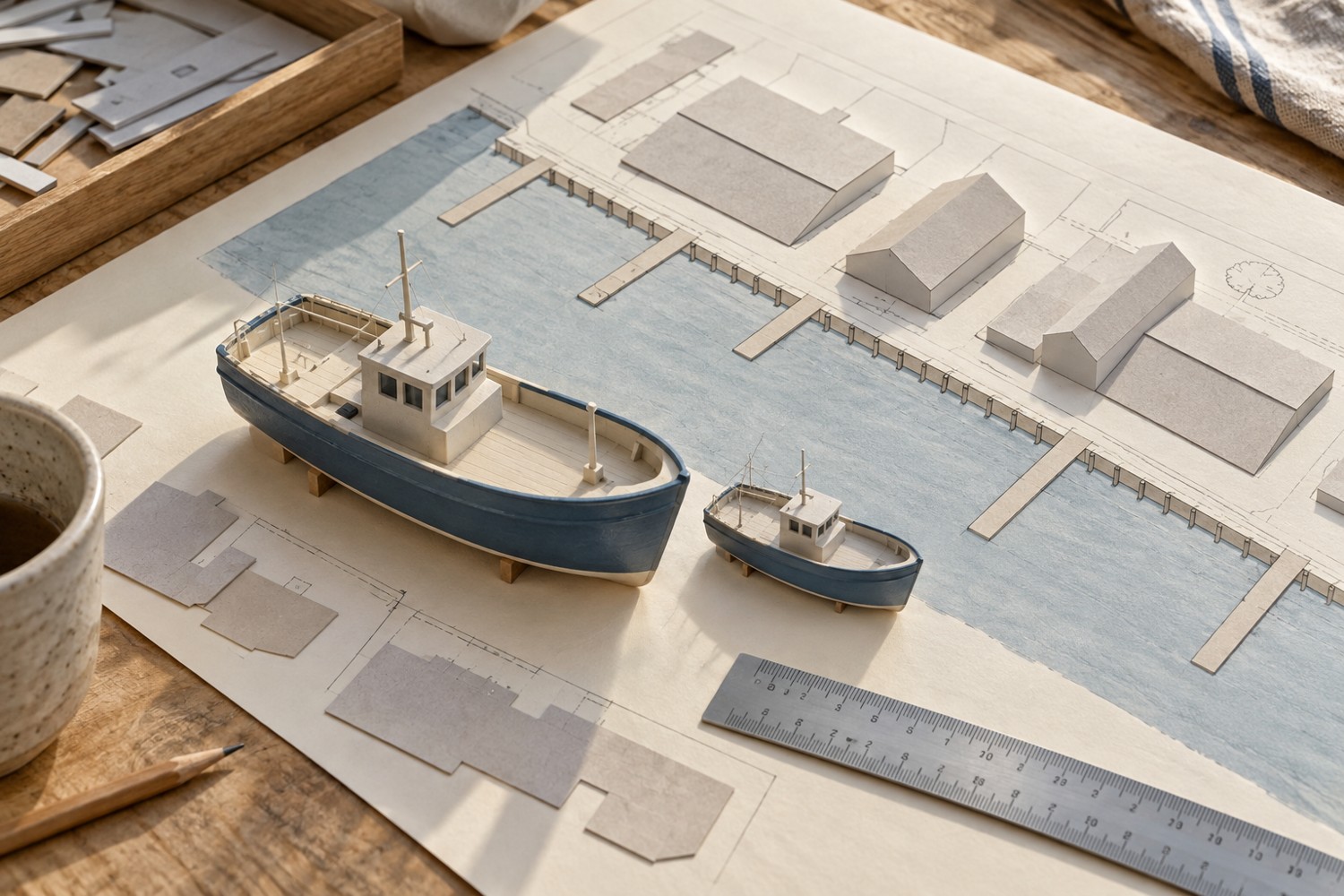
Choose a scale for a miniature harbour
Use the largest boat and the available footprint to choose a harbour scale before buying buildings and fittings.
Read article