Create a dock scene with believable spacing
Use the boat, walkway and working areas to set dock spacing before adding bollards, crates or ropes.
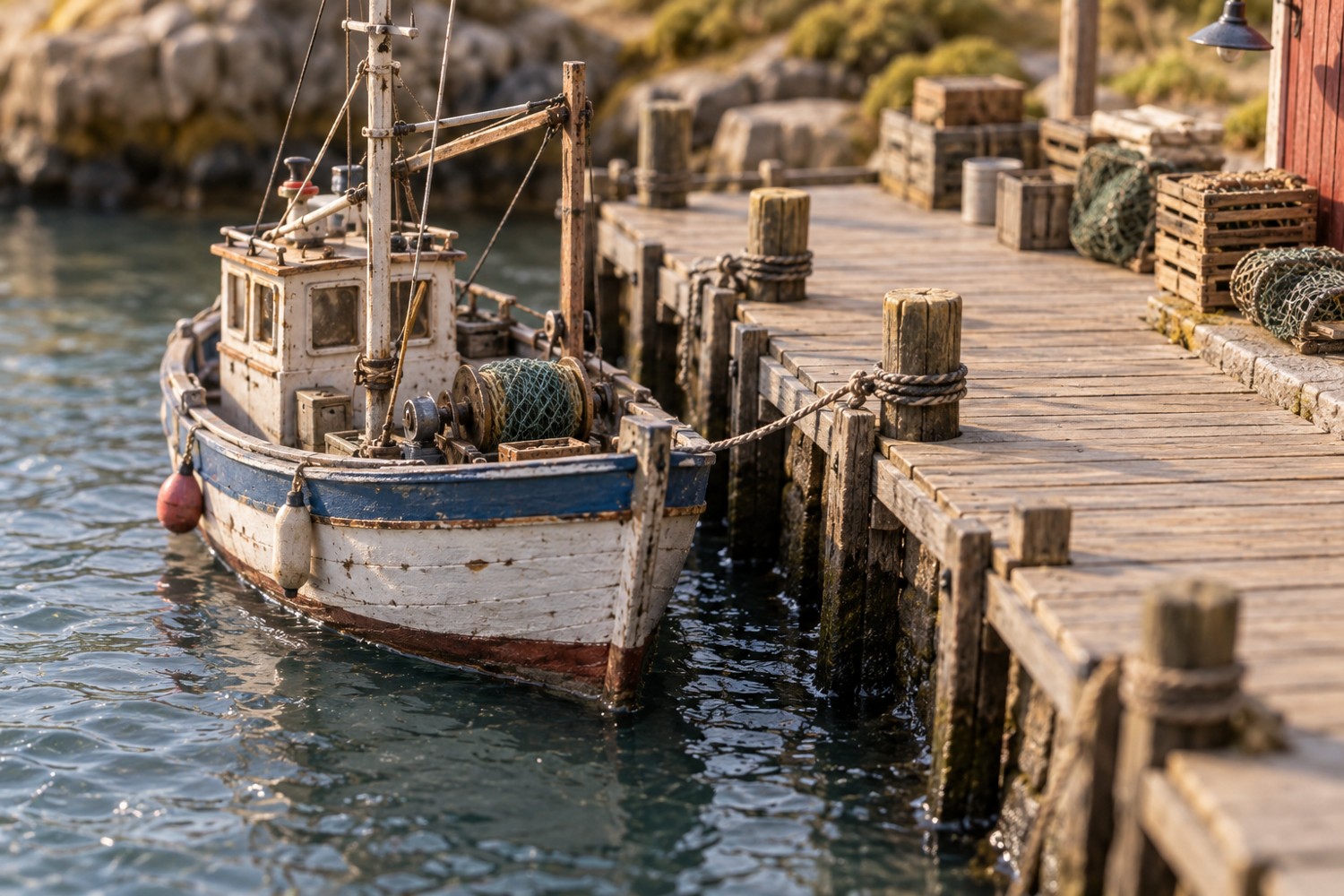
A dock scene needs space for activities as well as objects. Begin with the boat's full outline, including overhangs, and the edge of the dock. Establish the water level relative to both. A vessel sitting too high or too low can make the entire scene feel disconnected even when the paint and detail are convincing.
Draw a working strip along the dock where people or equipment could pass. Place storage farther back unless the scene deliberately shows an obstruction. Test this with a figure or a simple scale marker. A row of crates pressed against the water edge may look busy while leaving no plausible route through the scene.
Make repeated fittings serve a purpose
Bollards, posts and cleats should relate to the boats or dock structure. Avoid evenly distributing them merely to fill the surface. Choose a few locations that help explain mooring or divide working areas. If you include ropes, keep their thickness consistent with the miniature scale and their route visually clear.
Leave enough separation between the boat and dock for the forms to remain distinct. A narrow dark line can suggest the gap, but the hull should not appear embedded in the quay. Test the arrangement from the main viewing angle because a top-down plan can conceal this problem.
Buildings and cranes require their own clearances. Swinging or moving features can remain fixed decorative elements, but do not imply movement that the surrounding scenery would prevent. If a crane is the focal point, leave open ground beneath its working area rather than filling it with unrelated accessories.
Keep a few larger quiet surfaces. A plank deck or stone quay becomes easier to read when every square centimetre is not covered. Group small objects by activity: a repair corner, a loading stack or a fishing station. These clusters create variety without making the dock uniformly cluttered.
Before fixing details, photograph the scene with the boat temporarily removed. Check that the dock still makes sense and that you can reach its edges for painting and cleaning. Then replace the boat and test the final handling method. Any delicate rope or gangway crossing the gap should be added only after the major pieces are secure, and should detach separately if either piece is intended to remain removable.
Another detail to explore
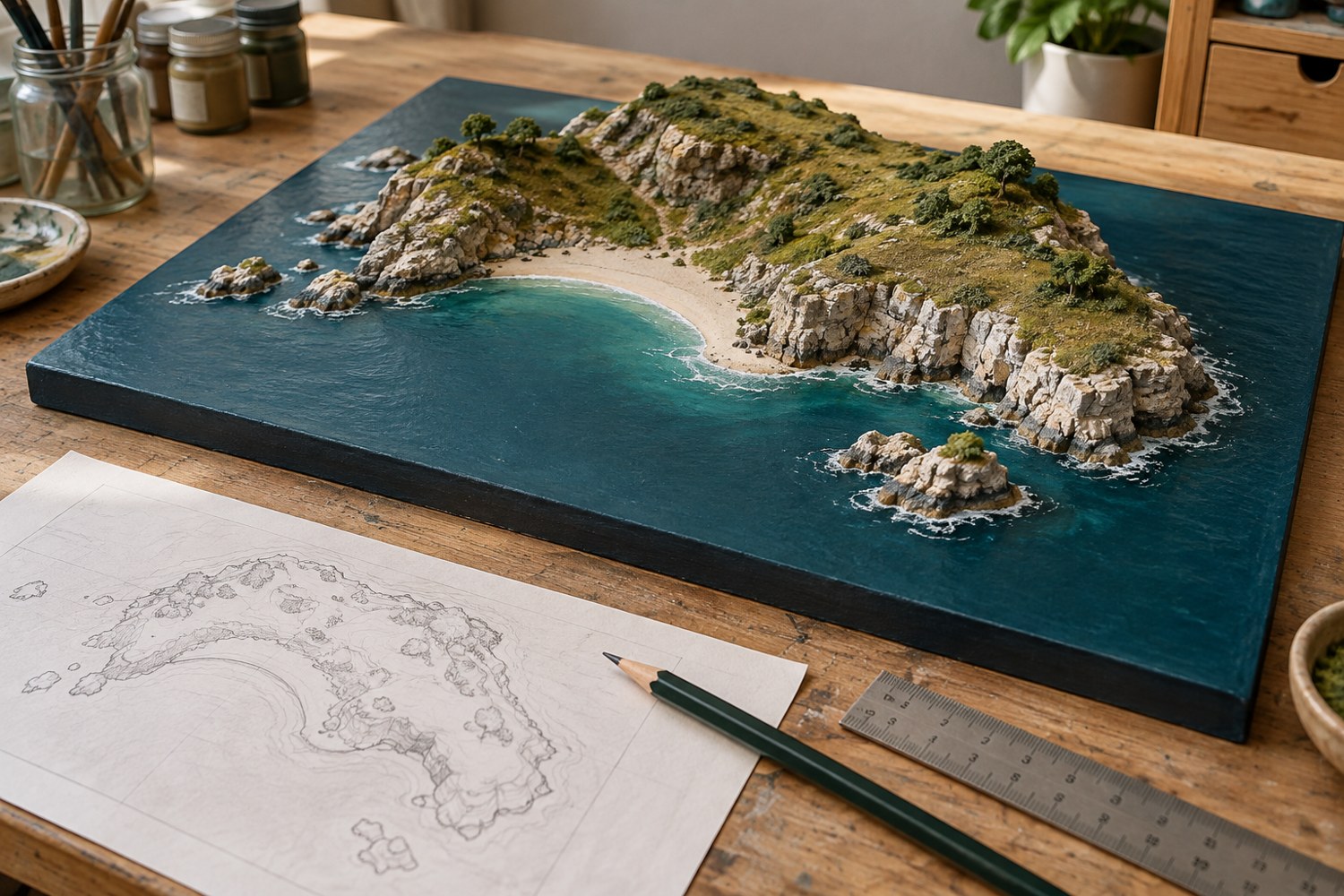
Plan an island diorama before building the coastline
Turn an island idea into a buildable composition by deciding the viewing angle, scale, shoreline and assembly order on paper first.
Read article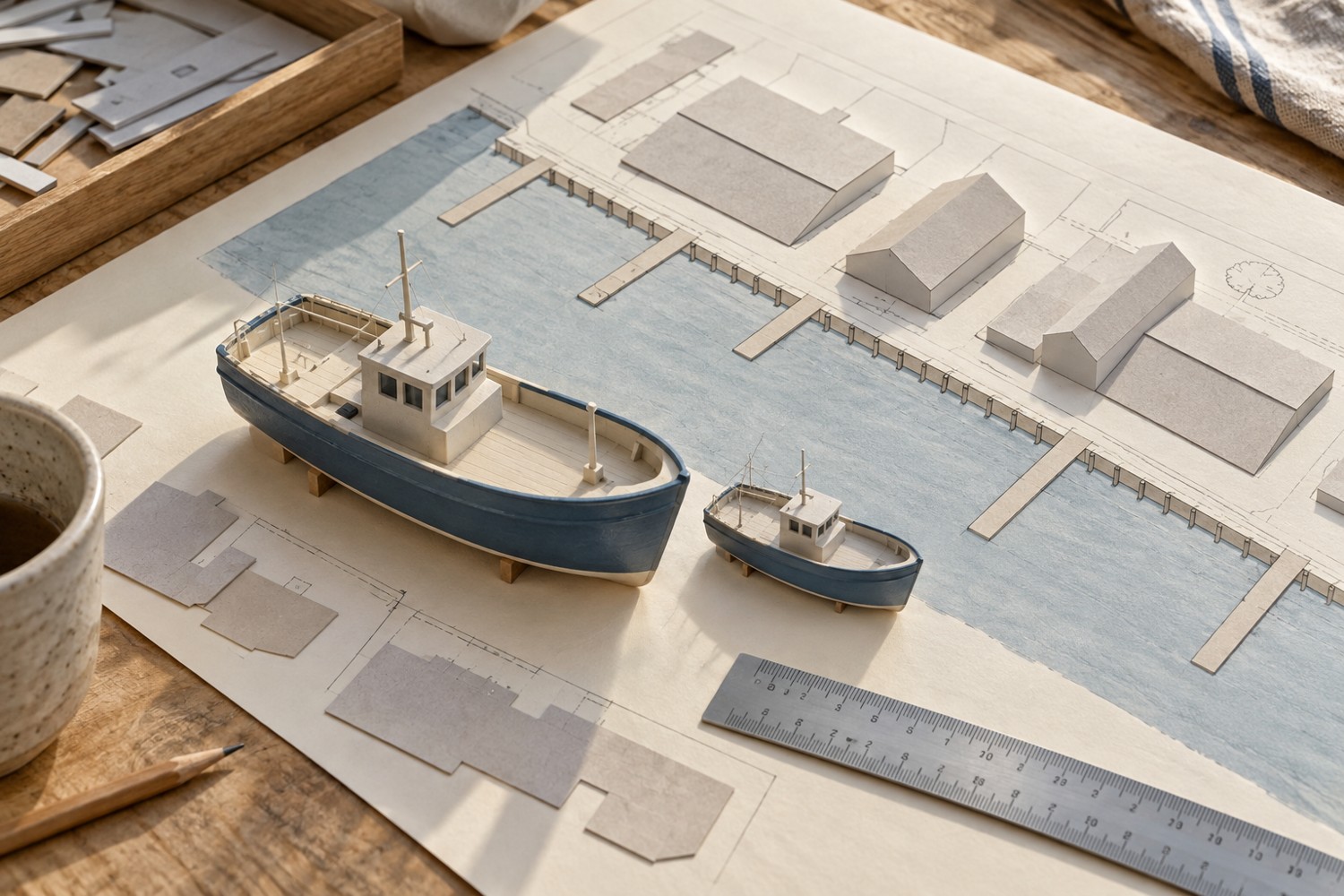
Choose a scale for a miniature harbour
Use the largest boat and the available footprint to choose a harbour scale before buying buildings and fittings.
Read article