Lay out paths before placing buildings
Draw usable routes through a scene before buildings and scenery make them impossible to change.
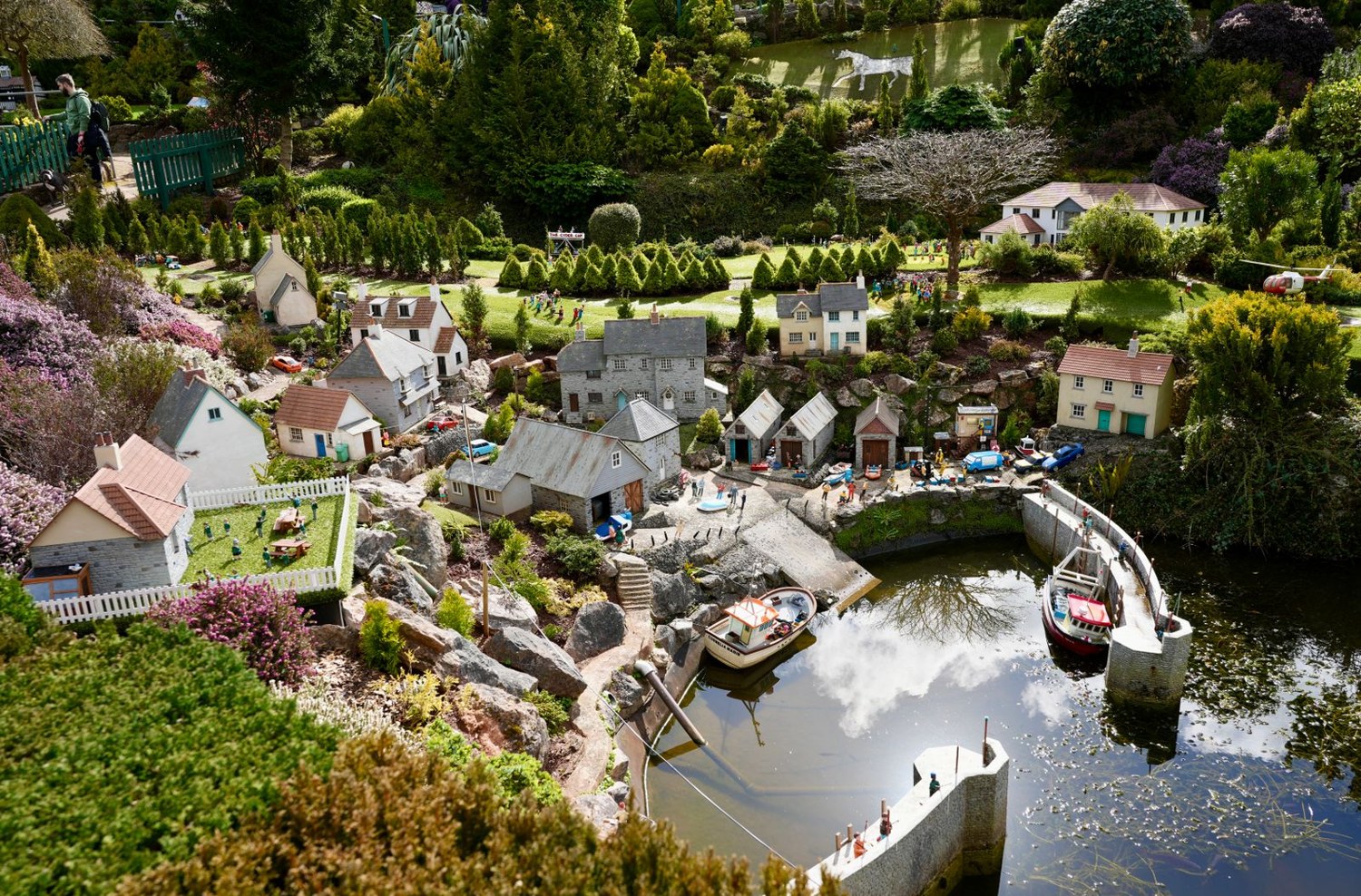
Paths reveal how a miniature place works. A route from a jetty to a house, or from a gate to a workshop, gives the scene a purpose even without figures. Start by marking destinations on the bare base. Connect them with loose strips of paper so you can adjust the route without leaving adhesive or pencil clutter.
Choose a path width by reference to the scene scale and intended use. A pedestrian track, a cart route and a service road should not all have the same width. Put a model doorway or figure beside the paper strip. This simple comparison catches paths that are technically visible but implausibly narrow.
Let the route respond to the terrain. It can skirt a rock, approach a building at an angle or widen near a gate. Avoid adding bends only to fill space. Each turn should lead somewhere or negotiate an obstacle. If the path climbs, check it in side view; a gentle curve seen from above may actually cross an abrupt vertical step.
Place building footprints beside the route rather than on it. Include doors, steps and roof overhangs in the trial arrangement. A doorway opening directly into a wall or a staircase landing on a steep bank will be harder to repair after texturing. Leave working space where a gate or removable building needs to move.
A path can differ from surrounding ground through value, texture or edge treatment. It does not need all three at full strength. On a small scene, a slightly smoother strip may be enough. Test a short section before making every path a strong pale ribbon.
Keep the edges irregular in a controlled way. Vegetation can interrupt a rural track, while a quay walkway might have a more deliberate boundary. Preserve the main route through those interruptions so the viewer can still follow it. Add puddles, stones or discarded objects sparingly where they will not confuse the direction.
Photograph the plan with the buildings temporarily in place. Trace the route with your eye from its beginning to its destination. If a prominent feature hides the only important connection, move the feature or reveal a second section of path beyond it. Fix the route only when the scene still makes sense with the decorative details removed.
Another detail to explore
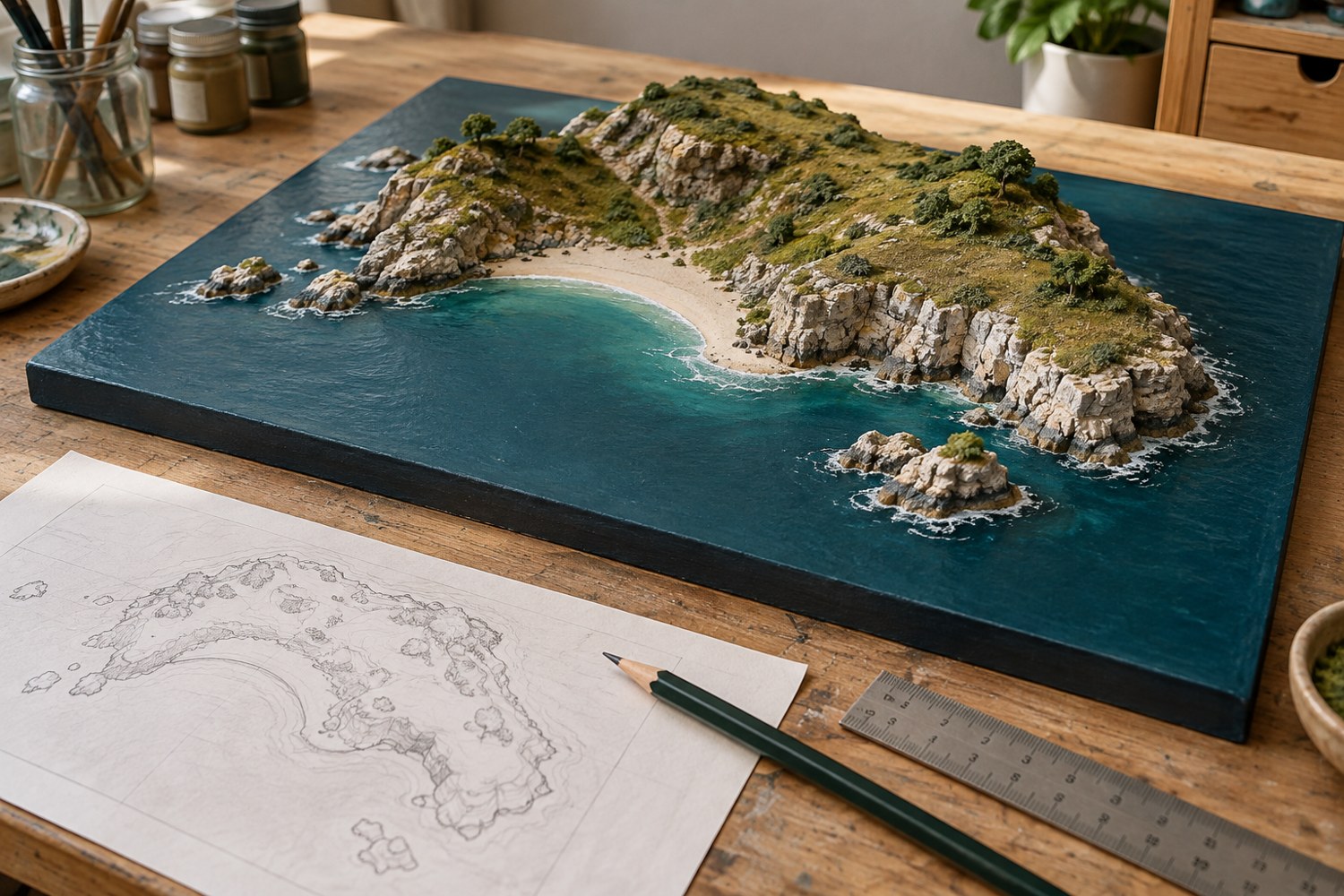
Plan an island diorama before building the coastline
Turn an island idea into a buildable composition by deciding the viewing angle, scale, shoreline and assembly order on paper first.
Read article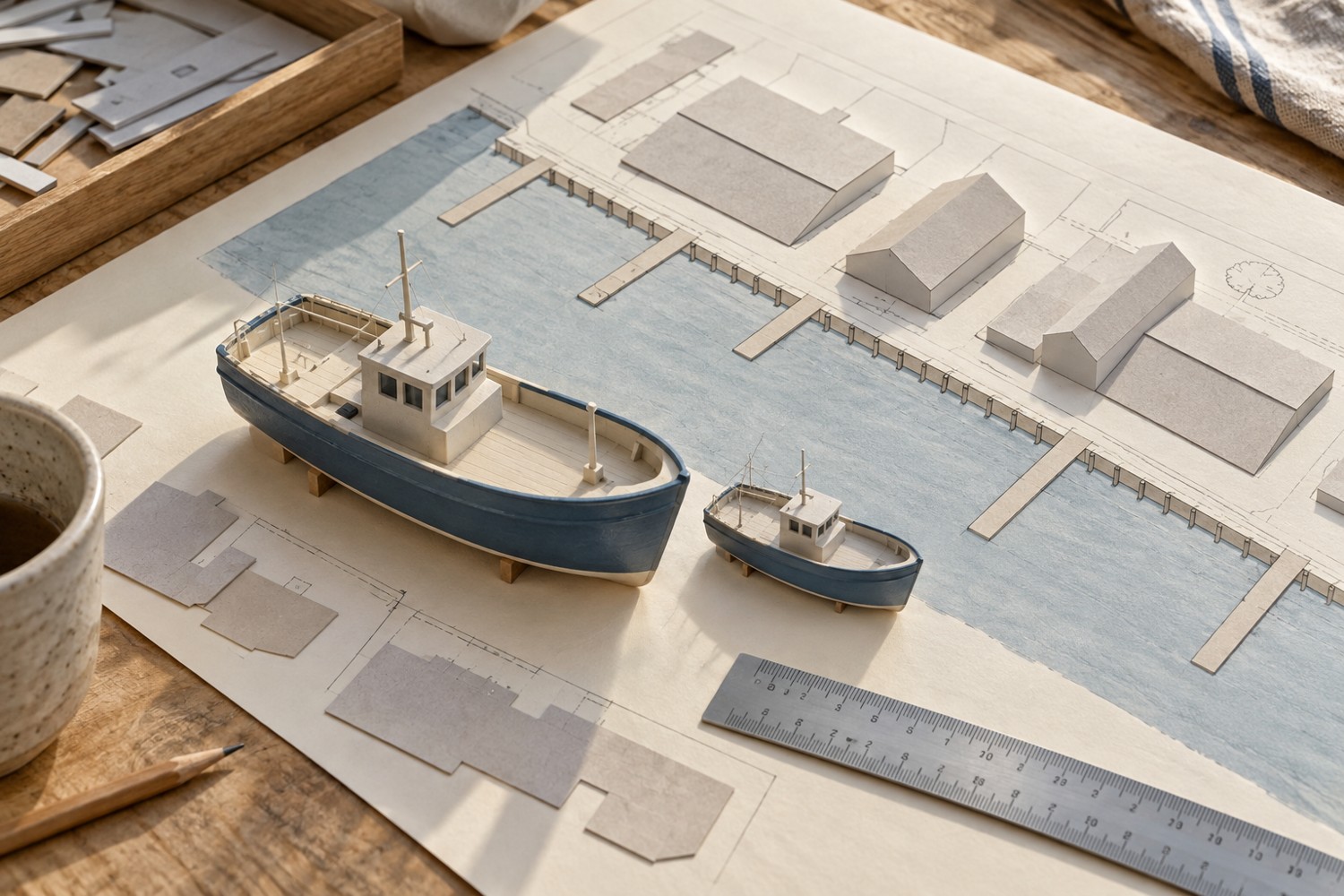
Choose a scale for a miniature harbour
Use the largest boat and the available footprint to choose a harbour scale before buying buildings and fittings.
Read article