Plan a removable building for a gaming board
Keep a gaming building removable by separating its scenic footprint from the surfaces used to locate and lift it.
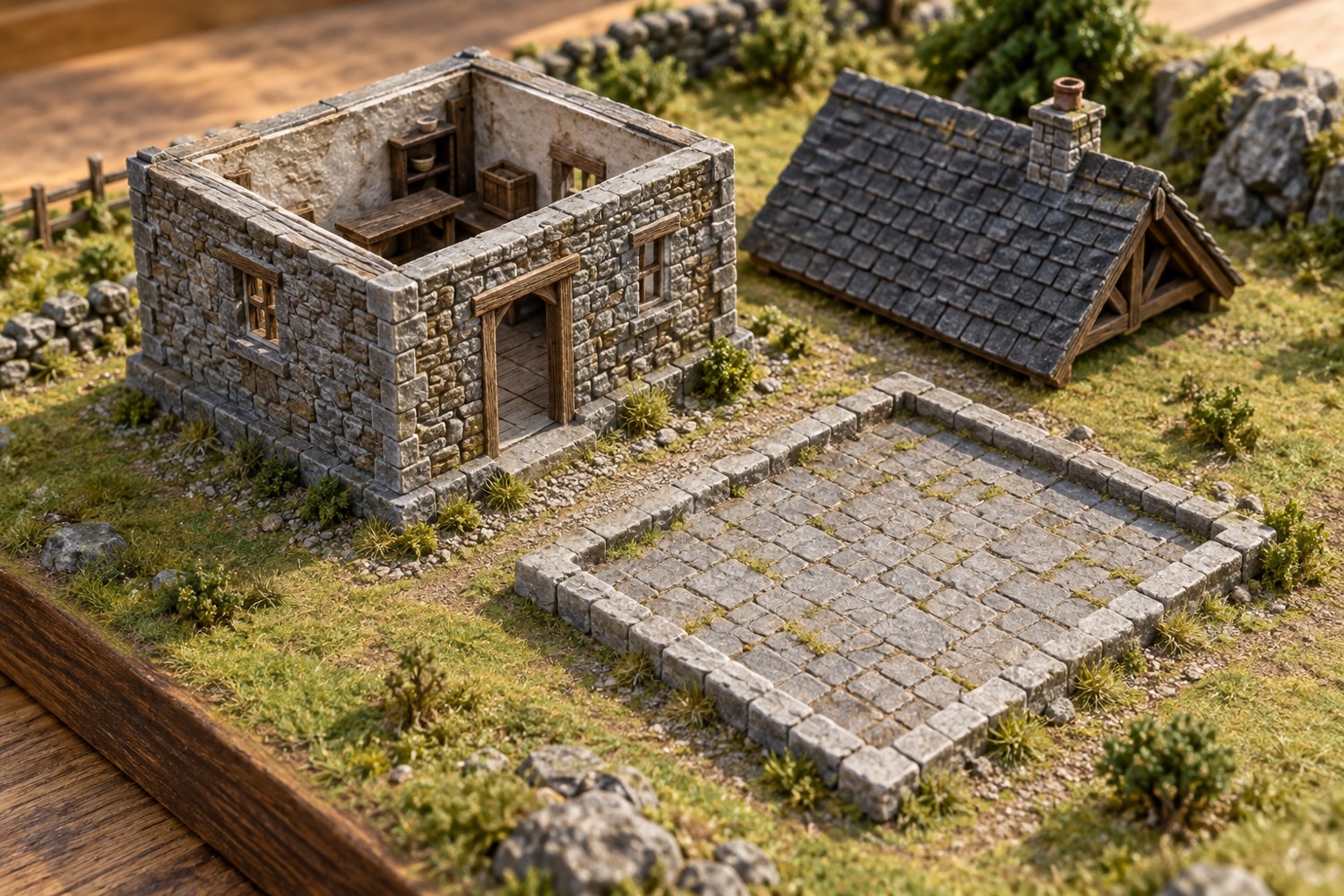
A removable building makes a gaming board easier to transport and rearrange, but its base needs a deliberate interface. Begin by deciding what stays on the board when the structure is lifted. A paved footprint can remain useful as an open courtyard; an unfinished hole surrounded by scenery cannot. Sketch both the occupied and empty versions before building either.
Make the building foundation broad enough to handle. Repeatedly lifting a model by its roof, chimney or balcony invites damage. A low foundation lip can provide a grip while also looking like a step or retaining edge. Check that your fingers can reach it after neighbouring walls and trees are installed.
Locate without forcing
Use a shallow recess, a small locating peg or an asymmetric footprint to establish position. Test the fit with scrap pieces before committing to the finished board. The building should settle into place without pressure and lift straight out. Paint and ground texture will occupy space, so a perfectly tight raw-material fit is unlikely to remain convenient after finishing.
If the building has an interior, decide whether the roof and the entire structure need separate removal. Their joints should not fight each other. Try lifting the roof with the building on the board; if the whole structure follows, the roof fit needs adjustment or a different handling point. Mark removable sections underneath so another player can understand the assembly.
Leave the locating surfaces free of loose flock and grit. Texture the visible ground around them, then check the fit again after the adhesive has dried. A stray grain can make one corner rock and encourage someone to push harder on a fragile part.
Consider play access as well as appearance. Place a representative miniature and move it around the doorway, alley and interior. A visually narrow gap may be unusable once fingers must reach it. Photograph a few likely arrangements and check the rules of the game you actually play before defining openings or base dimensions.
Finish with a small movement test on a clear table. Lift, replace and rotate the permitted parts several times using the intended grips. Any awkward motion now is likely to become a broken detail later. Store the removable building in a compartment that supports its foundation, with its matching location noted on the board underside.
Separate the scenic footprint from the play footprint
A large scenic foundation can make a modest building occupy too much of a gaming board. Trace the actual building and then the proposed base around it. Ask which extra areas explain the setting and which simply enlarge the obstacle. Steps, a porch and a small yard may be useful; a broad empty border may interfere with nearby terrain without adding much.
If the rules distinguish walls, footprints or accessible interiors, decide how the physical model will communicate those boundaries. Use a removable paper test and play through a short movement example before applying texture. Do not claim a universal gaming standard where different systems use different conventions.
Plan the empty footprint for more than appearance. If the building is lifted during a game, pieces left inside should not fall into a recess or lose their position. A flat scenic insert or a separate interior floor can keep the state understandable. Mark any orientation discreetly so replacing the shell does not require moving every object around it.
Another detail to explore
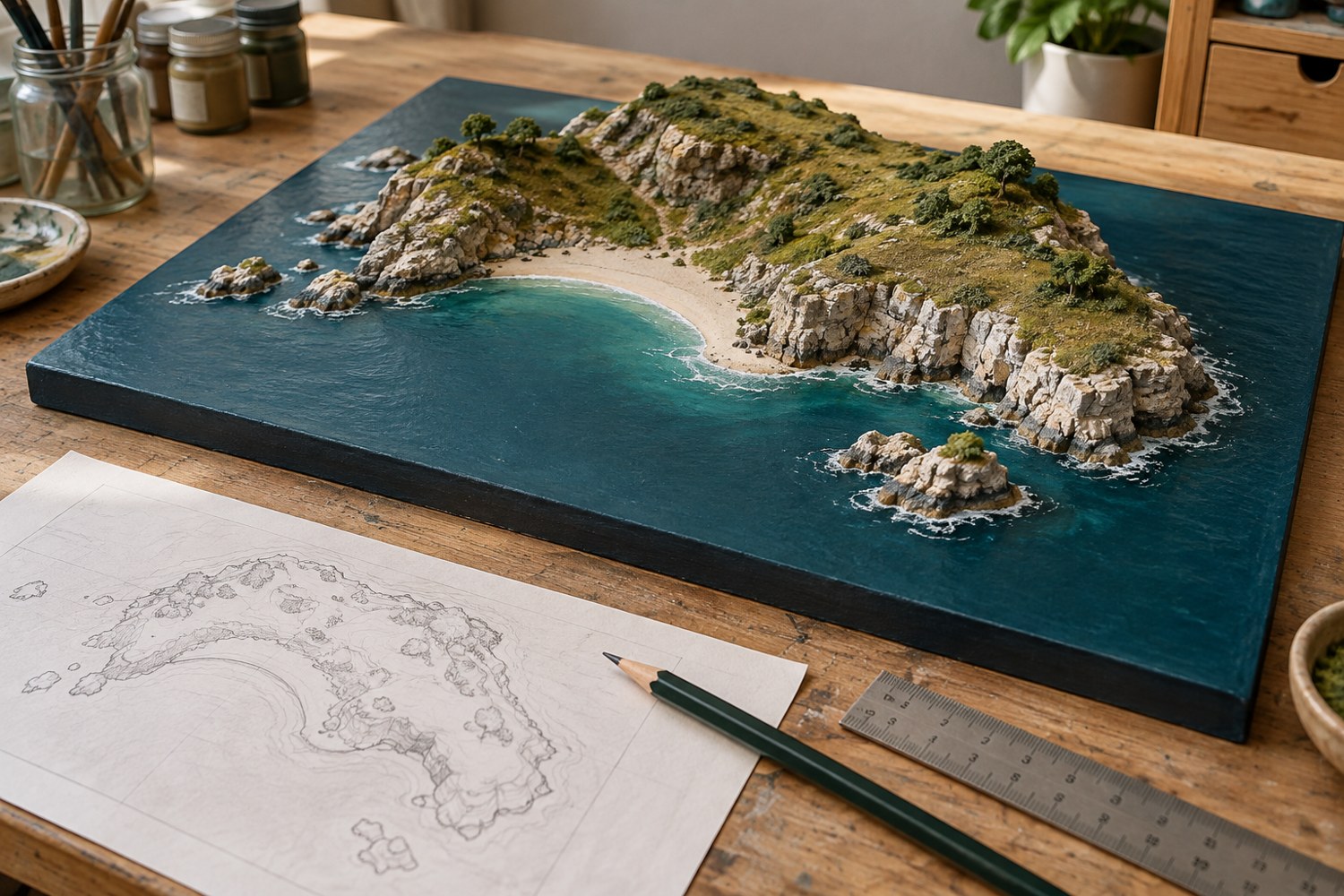
Plan an island diorama before building the coastline
Turn an island idea into a buildable composition by deciding the viewing angle, scale, shoreline and assembly order on paper first.
Read article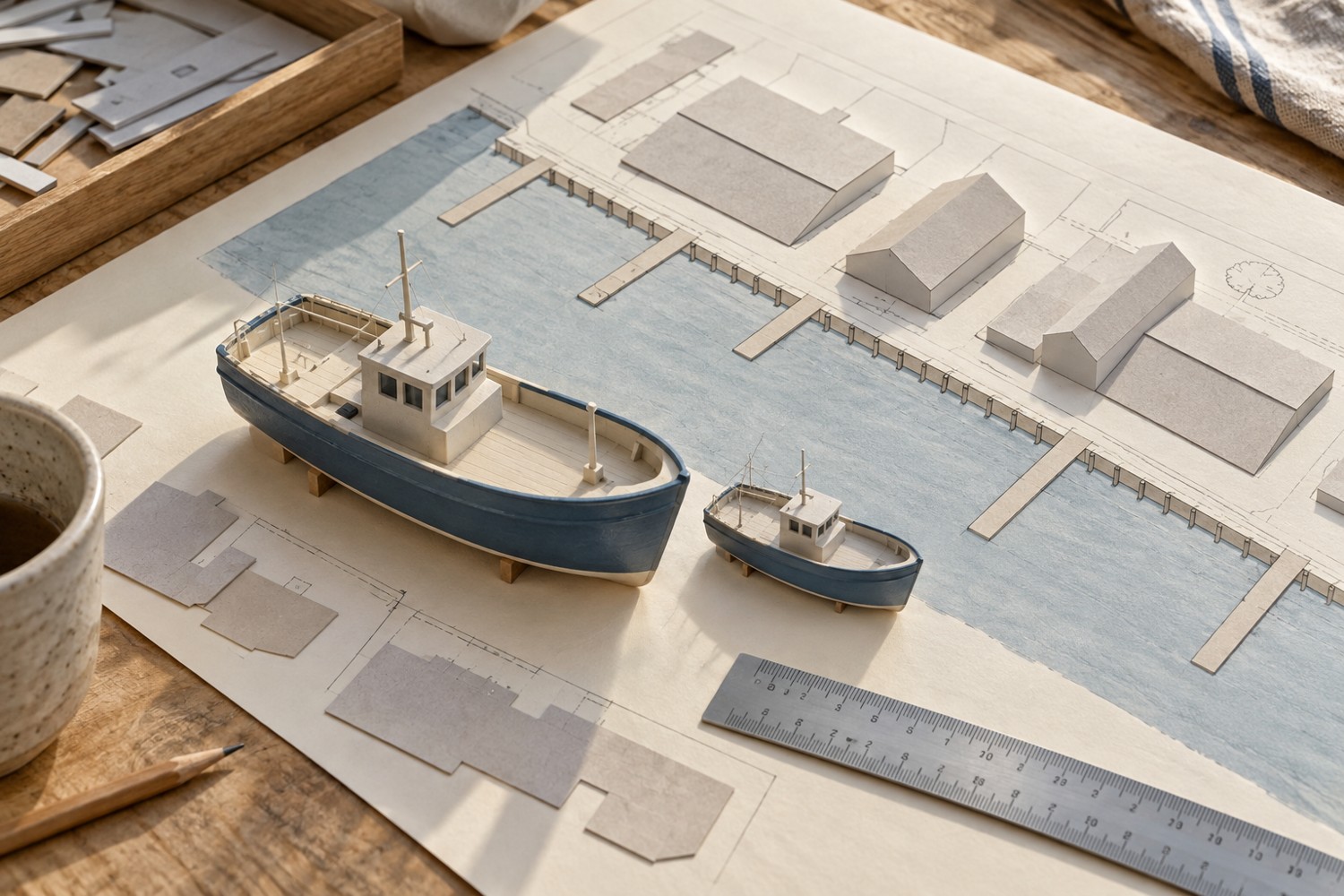
Choose a scale for a miniature harbour
Use the largest boat and the available footprint to choose a harbour scale before buying buildings and fittings.
Read article