Plan an island lighthouse scene
Make the lighthouse, headland and route from the landing point work as one composition before adding coastal details.
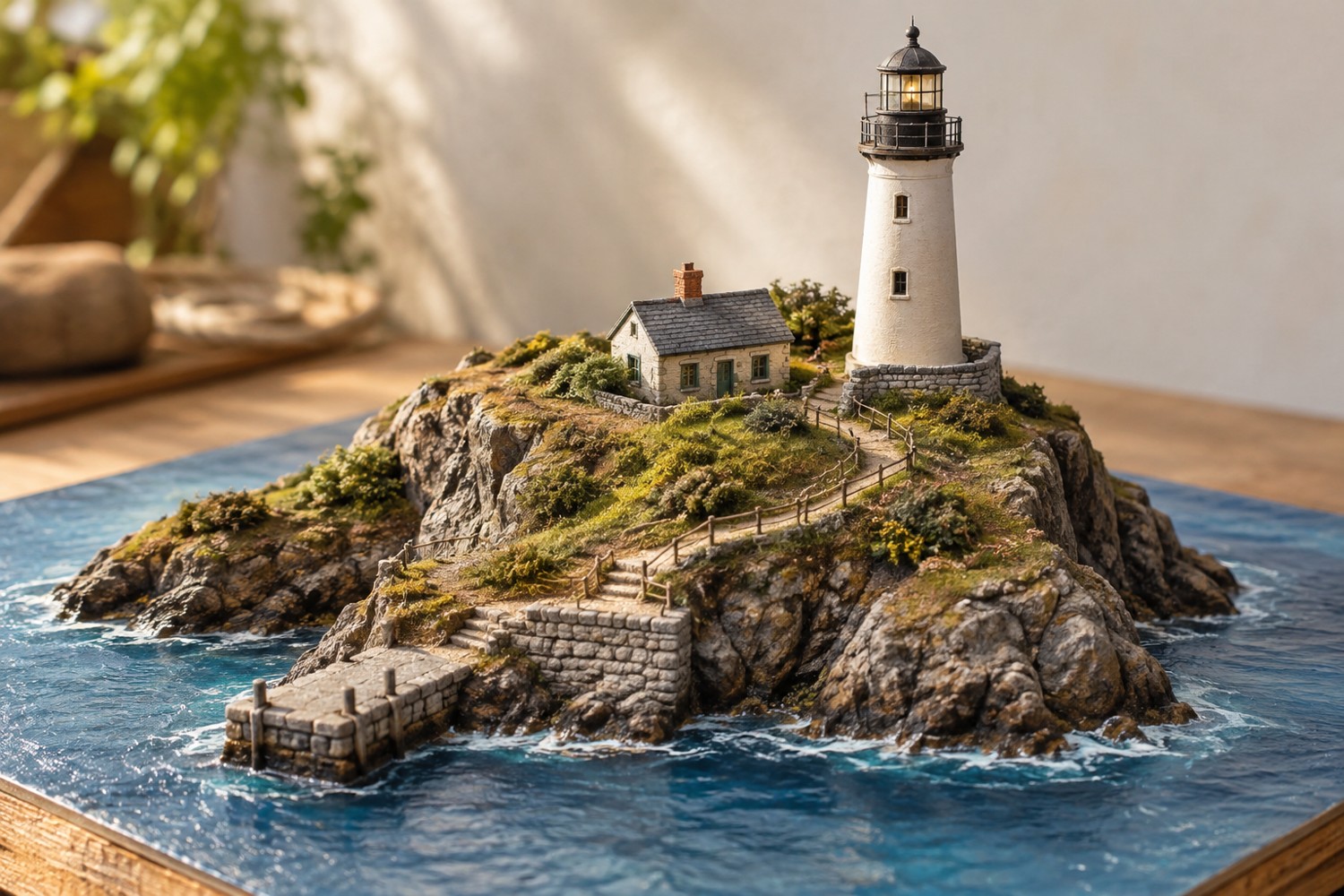
A lighthouse scene can become a tower standing on a generic lump of rock unless the land explains its position. Choose a headland shape that gives the tower a clear silhouette and leaves a visible relationship to the surrounding water. Start with the tower's actual footprint and height, then build the island around it.
Place a simple tower substitute on several rough landforms. View each from the intended front and at shelf height. Avoid lining the tower up with the highest rock behind it. A strip of open background around the lantern room helps it remain readable, especially if the final model has railings or glazing.
Give the station an approach
Choose where someone would arrive: a small landing, path or road entering from beyond the base. Connect it to the tower and any keeper's building. The route does not need figures to explain its purpose. A doorway facing a cliff with no approach will be more conspicuous than a missing tiny accessory.
Keep the tower's immediate ground relatively simple. A clear platform or worn path can separate it from the rock texture. Place storage buildings or walls where they support the composition without hiding the base of the tower. Check roof heights before committing; a small shed can obstruct the intended focal point from a low angle.
Decide early whether the lighthouse will have an actual light. A non-electrical model can suggest the lantern through paint and glazing. An illuminated version needs accessible components, suitable power equipment and a route for wiring that does not require breaking the finished scenery. Follow the component instructions and keep service access available.
Test the tower as a removable piece if the scene must travel. Its foundation can conceal a locating joint, while the lantern remains untouched during handling. Do not make a thin railing or roof cap the natural lifting point.
Use colour to connect the station with the landscape. A pale tower can provide contrast without making every rock edge equally bright. Reserve weathering for places that explain surfaces and exposure, rather than covering the entire structure with uniform streaks. Photograph the rough composition before adding water texture, grass or ropes. If the lighthouse is already clear and the route makes sense, those details can enrich a scene whose structure is working.
Tell the story with a small set of details
Choose a few details that connect the lighthouse to its function in the scene. A route from a landing, a boundary wall and a service doorway can explain more than a large collection of unrelated coastal objects. Place each detail on the paper plan first and ask whether it improves the viewer's understanding of the station.
Keep the lantern room visually distinct from the tower below. Its framing can become heavy at a small scale, so test the silhouette before adding every possible bar or railing. If you simplify the construction for printability or handling, preserve the main proportions rather than crowding the top with oversized detail.
Use the sea and sky-facing side as a compositional contrast to the sheltered approach. The land can be rougher on one side and quieter near the path without requiring a different paint palette for every area. A broad calm patch near the station also gives the eye a place to rest beside the tower.
If the scene refers to a real lighthouse, keep reference images and distinguish documented features from invented scenery. For an original design, avoid attaching a real place name simply to make it sound historical. The model can have a coherent fictional setting without claiming to reproduce an actual coast.
Another detail to explore
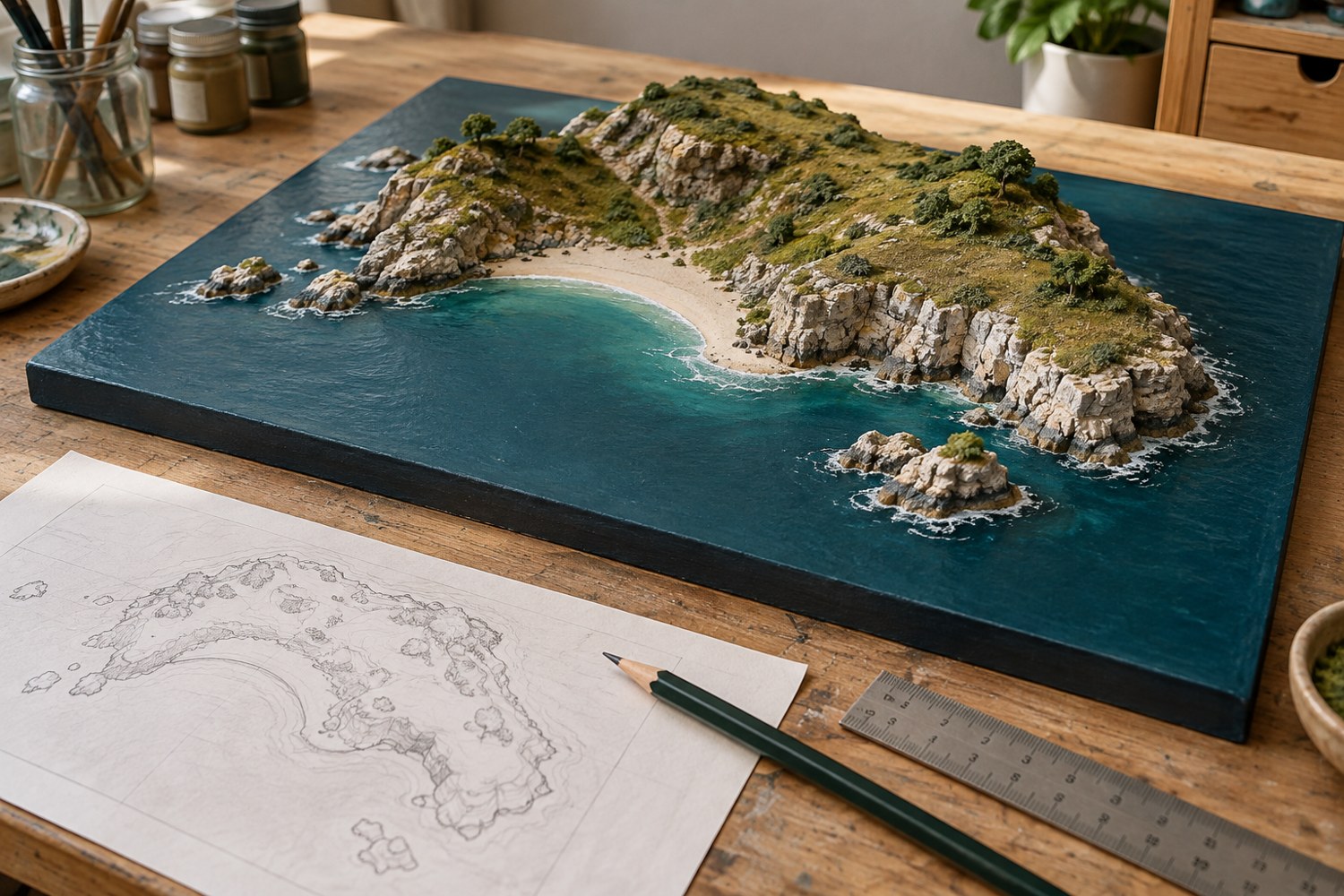
Plan an island diorama before building the coastline
Turn an island idea into a buildable composition by deciding the viewing angle, scale, shoreline and assembly order on paper first.
Read article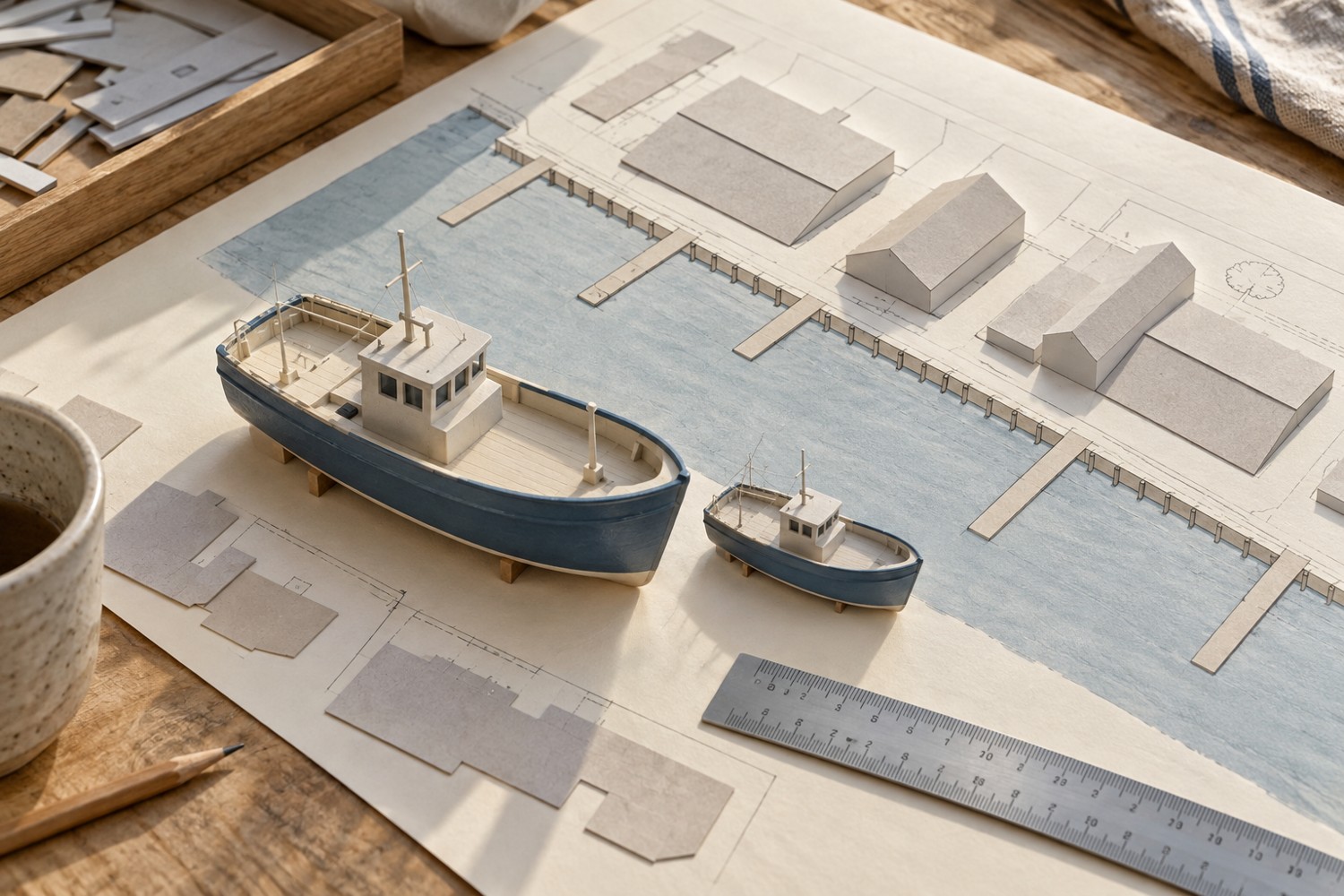
Choose a scale for a miniature harbour
Use the largest boat and the available footprint to choose a harbour scale before buying buildings and fittings.
Read article