Use repeated parts without making a scene look identical
Vary placement, grouping and context while preserving the underlying identity of repeated buildings or terrain components.
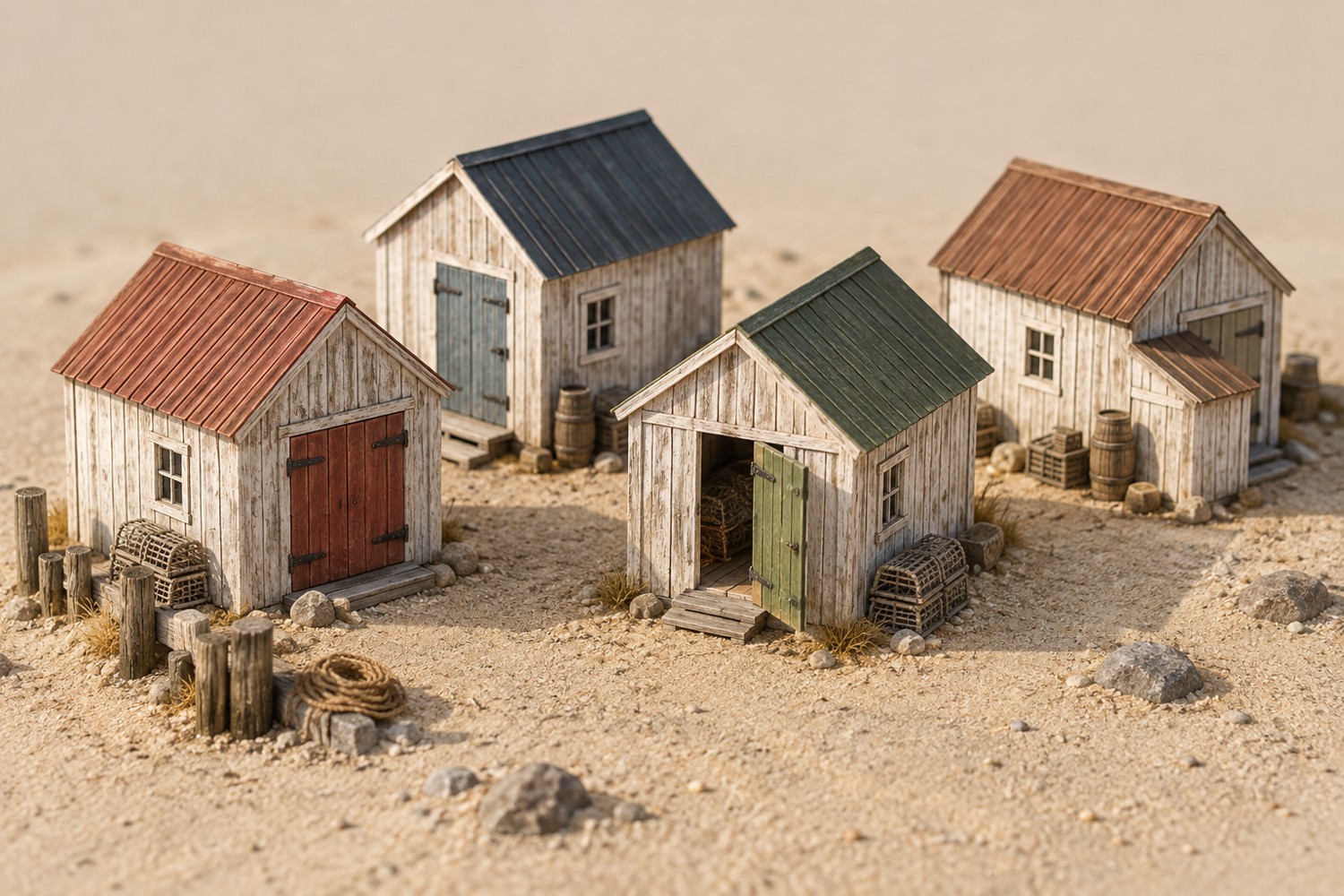
Repeated parts are useful in a village, dock or gaming board because they create a visual vocabulary. The problem appears when every copy has the same angle, colour emphasis and surrounding space. Start by deciding what should remain consistent. A row of related sheds may share roof shape and materials while differing in doors, clutter and use.
Arrange the unpainted parts in groups before modifying them. Rotate a few, vary the gaps and offset their front edges. Check the arrangement from the normal viewing position. A small positional change can do more than attaching a different barrel to every identical wall.
Give each group a context. Two sheds could face a loading area, while another sits beside a path. The direction of doors and nearby objects should support that use. Random rotation may hide repetition but can also produce buildings whose entrances face inaccessible corners.
Choose a few controlled variations: a different roof tone, a repaired panel, an open doorway or a small extension. Keep them subordinate to the scene. If every copy has a dramatic modification, the original sense of a coherent settlement disappears.
Paint repeated parts together through their common stages, then separate them for individual accents. Keep a note of the shared colours so later additions belong to the same set. Avoid giving each object an unrelated bright palette simply to prove it is different. Variation in value and wear can be enough.
Use surrounding ground to distinguish copies. A building beside the water can have a different immediate setting from one near a garden, even if both use the same basic shell. Place clutter where it has a reason to be, leaving doorways and routes readable.
Take a photograph at thumbnail size. If the repeated silhouette is still the first thing you notice, alter the grouping or partially overlap one part with another appropriate scenic element. Do not hide essential access or make removable pieces difficult to lift. Keep the most recognisable modified copy near the focal area, and let quieter repeats establish the wider environment. The aim is a family of related objects with different roles, rather than a collection in which every item competes to be unique.
Another detail to explore
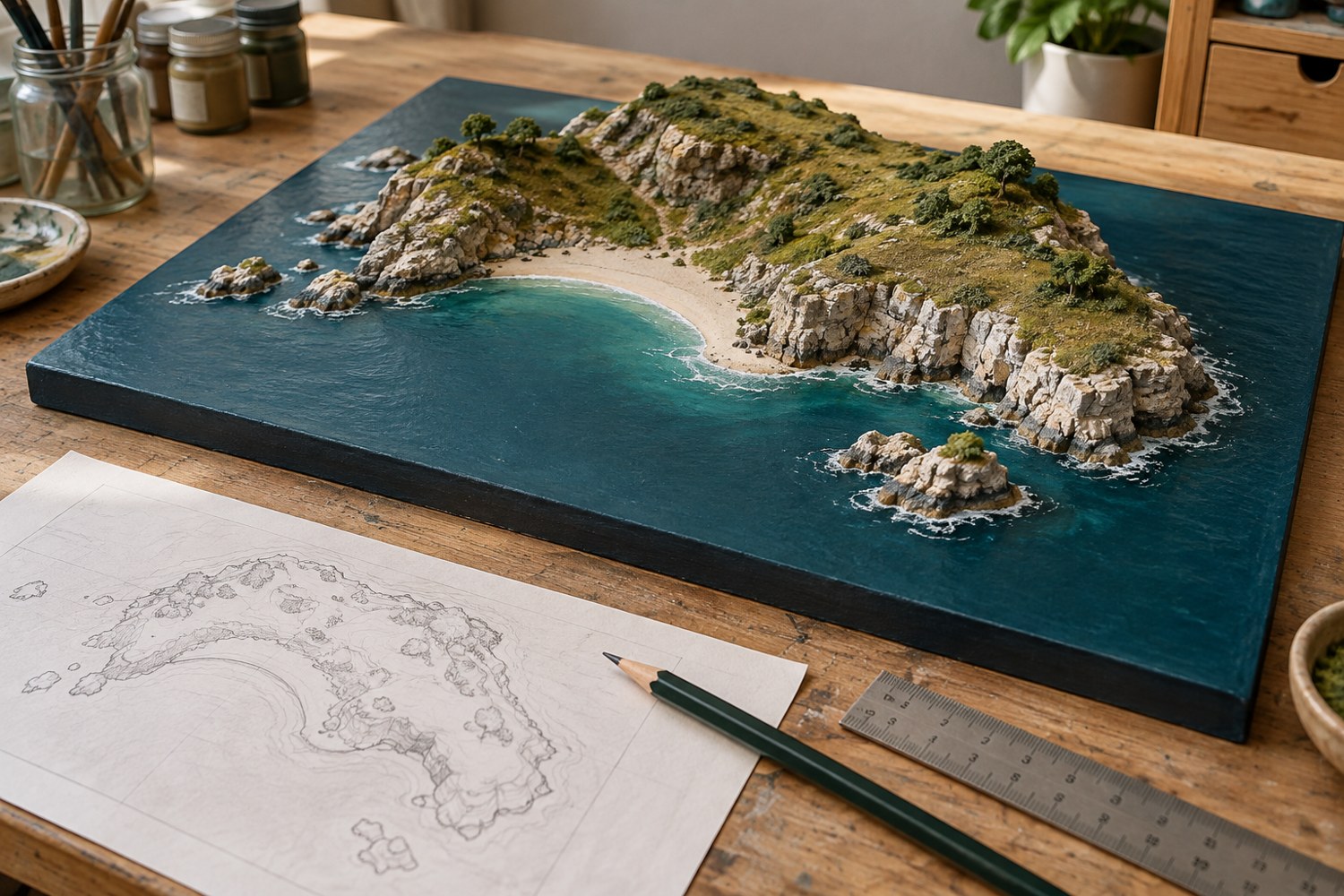
Plan an island diorama before building the coastline
Turn an island idea into a buildable composition by deciding the viewing angle, scale, shoreline and assembly order on paper first.
Read article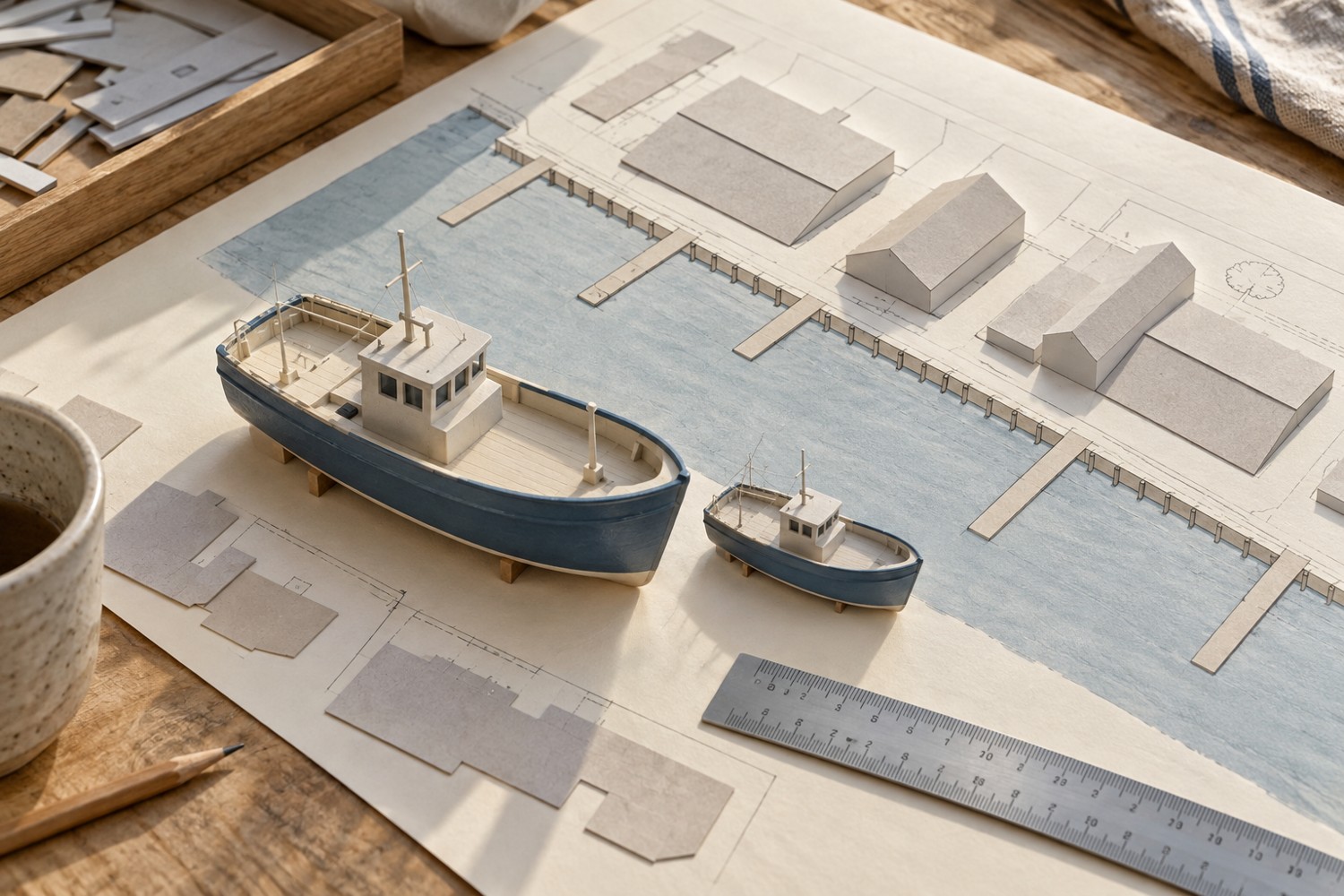
Choose a scale for a miniature harbour
Use the largest boat and the available footprint to choose a harbour scale before buying buildings and fittings.
Read article